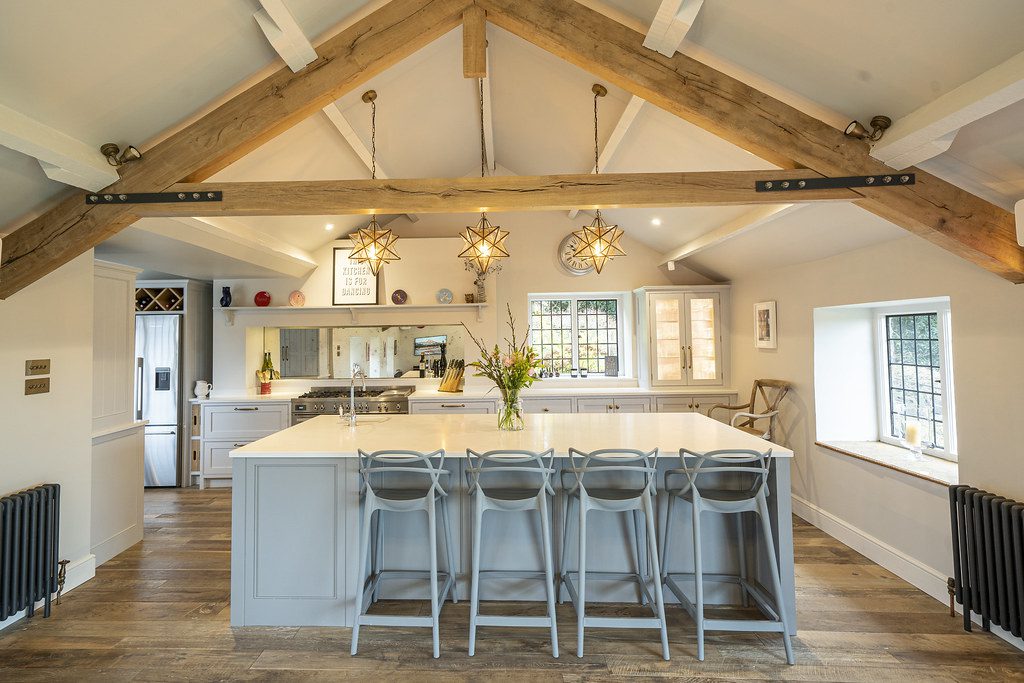
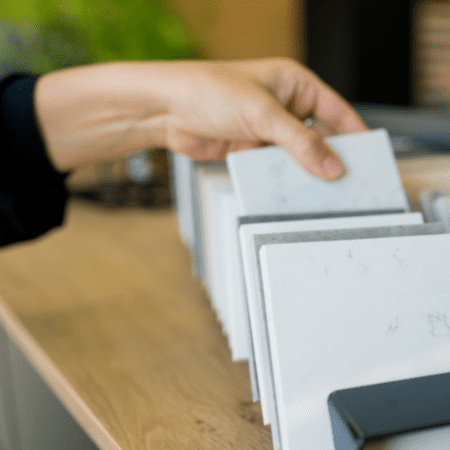
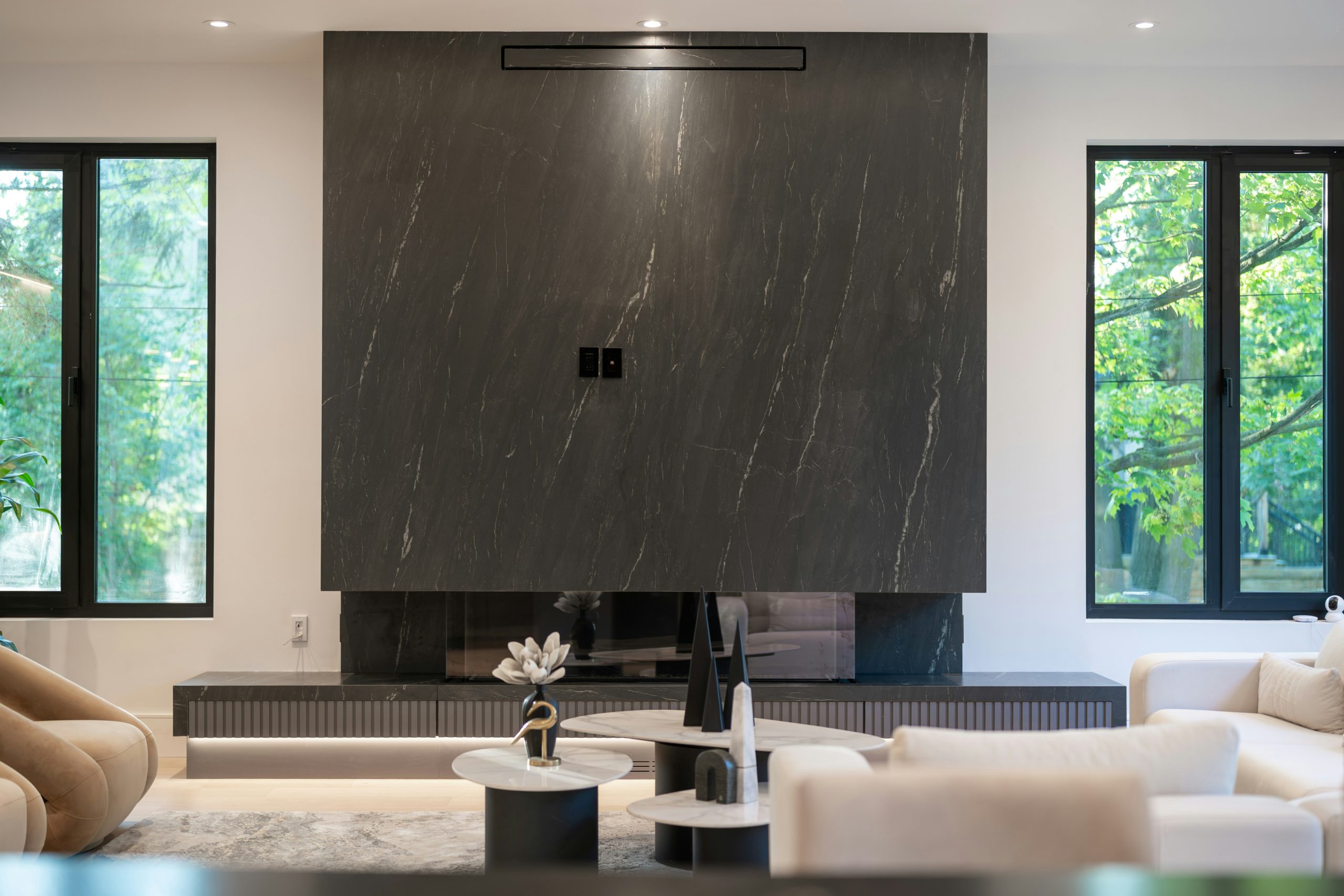
Choosing a new stone worktop usually starts with the material.
Quartz or granite? Light or dark? Subtle or heavily veined? And of course, how much will it cost?
But there’s another decision that’s every bit as important.
Who’s actually going to make them?
A stone worktop isn’t an off-the-shelf product. Even when two customers choose the same material, the end result can look completely different depending on how it’s templated, planned, fabricated and installed.
And with the UK stone fabrication industry currently under greater scrutiny than ever before, there’s another side to that decision too. How responsibly are your worktops being made?
Your Worktops Start Long Before Installation Day
When your finished worktops arrive at your home, much of the skilled work has already happened.
The kitchen has been accurately templated. The slabs have been planned. Your sink and hob cut-outs have been positioned. Edges have been fabricated and polished. Joins have been considered and, where the stone has distinctive movement, decisions have been made about how the pattern will run through the kitchen.
These are details you may never see happening.
But you’ll see the results every day.
That’s why choosing the stone worktop isn’t simply about choosing a slab. You’re also choosing the people and processes that turn the slab into your fitted kitchen.
Why Is Stone Fabrication in the News?
The Health & Safety Executive (HSE) is currently carrying out a major programme of inspections across the UK stone fabrication industry.
As of September 1, 2026, HSE had undertaken 226 inspections of premises where engineered stone may be used and 394 enforcement. The programme is continuing with with more than 1,000 inspections planned. Importantly, the Government has said it is too early to draw general conclusions about compliance across the sector.
The reason for the increased scrutiny is respirable crystalline silica (RCS).
When engineered stone containing crystalline silica is cut or processed, very fine silica dust can be released. If that dust isn’t properly controlled, repeated exposure can serious occupational diseases, including silicosis.
Does That Mean Quartz Worktops Are Unsafe in Your Home?
This perhaps the most important thing for homeowners.
The current HSE campaign is about occupational exposure during exposure during the processing and fabrication of engineered stone.
It isn’t about a finished quartz worktop simply sitting in your kitchen.
The people potentially at risk are the ones cuttings and processing the material without appropriate controls in place.
So as a customer, the question isn’t ‘is quartz safe?’ A better question is ‘How as my quartz been fabricated?’
Why Responsible Fabrication Costs
Running a professional stone fabrication facility requires considerable investment.
There is the machinery itself, but there is also protective equipment, maintenance, staff training, health surveillance and procedures needed to operate safely.
Then there is the craftsmanship. Experienced templaters, CNC operators, stonemasons and installers all contribute to the finished result.
None of this is visible when comparing two quotes, but it forms the real cost of producing your worktops properly.
In announcing its inspection programme, the HSE made an important point that outside of employee safety, businesses that cut corners also undercut businesses investing in doing things properly.
For customers, that’s another reason why the cheapest quotation doesn’t necessarily represent the best value.
What Difference Does a Good Fabricator Make to Your Kitchen?
Safety is hugely important, but it’s not the only reason to look carefully at who makes your worktops.
Stone fabrication is a skilled process.
Walls aren’t always straight. Cabinet runs aren’t always perfectly square. Large island may need careful slab planning. Veining needs positioning. Joins need to be considered. Sink cut-outs, drainer grooves, upstands and splashbacks all have to work together.
An experienced fabricator can identify many of these issues before the stone reaches your kitchen.
And when something unusual arises, as it inevitably does occasionally on renovation projects, experience matters.
Don’t Be Afraid to Ask Who Is Making Your Worktops
If you’re buying your kitchen through a showroom, it’s perfectly reasonable to ask who will fabricate the worktops.
Some kitchen companies work closely with established local fabricators. Others may purchase through larger supply chains or subcontract the work.
Neither arrangement determines the quality of the finished product but by knowing who they are you can try and find out more. Check for previous reviews on sites like Trustpilot or Google Reviews and see if they are members of the The Worktop Fabricators Federation.
If you are buying directly from a fabricator, ask about their workshop and processes. Ask how long they’ve been established. Find out if everything is done in-house. A professional fabricator should be happy to share those details, we are more than happy to have those conversations.
Look Beyond the Slab
When you visit a showroom, it’s understandable that the stone is your main focus, after all that’s the part that you’ll live with.
But behind every beautifully finished worktop is a fabrication process most homeowners will never see.
There are people who measure it, plan it, cut it, polish it, handle it and install it.
Choosing a responsible fabricator means considering those things too. So when you’re comparing stone quotations, don’t just ask which stone you prefer, ask who’s making it. The answer makes more difference than you think.