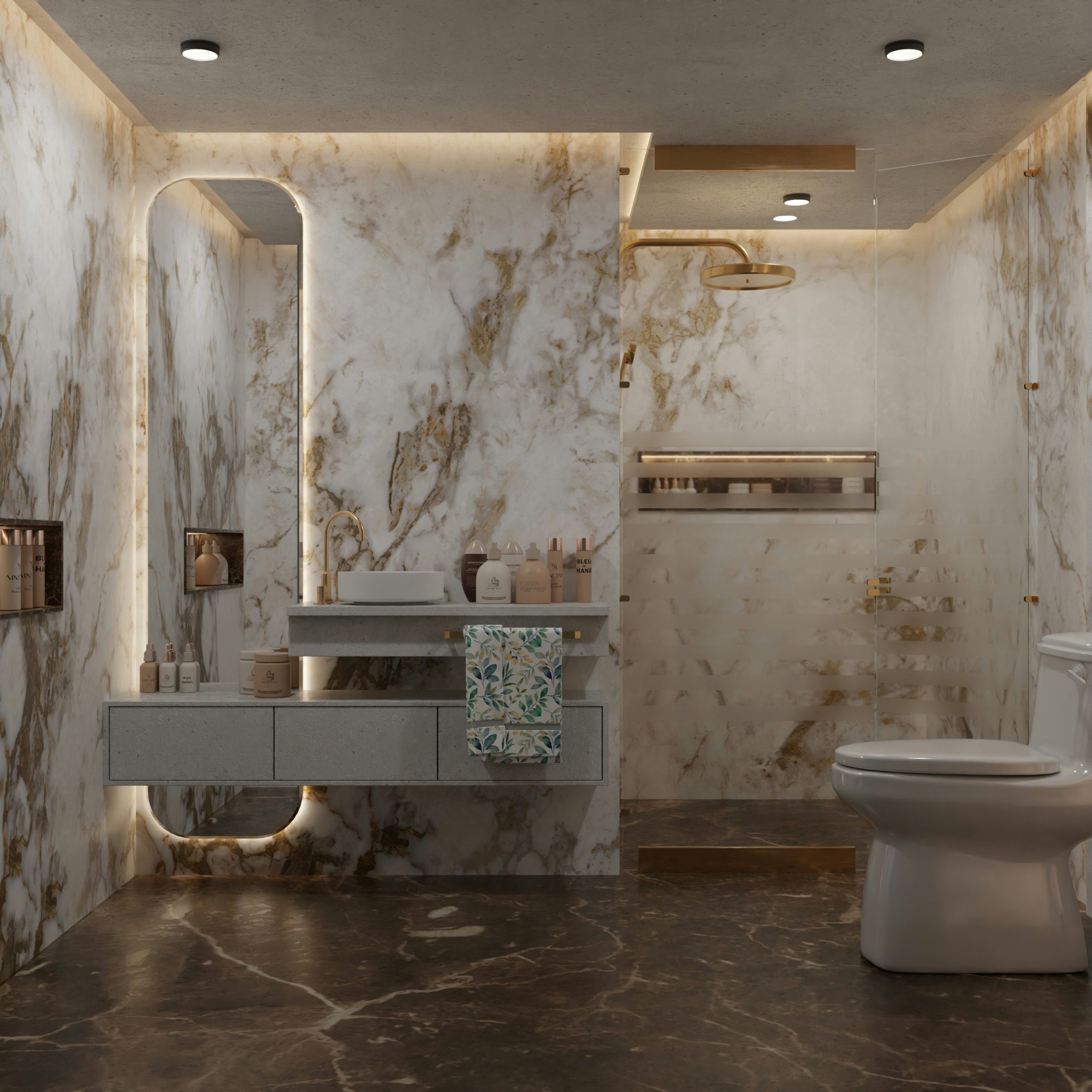
A small bathroom may have limited floor space, but that does not mean it has to feel basic. In fact, compact rooms often benefit from carefully chosen materials because every detail is visible. A beautifully finished vanity top, a slim shelf or a well-proportioned stone windowsill can change the character of the room without adding visual clutter.
Stone is sometimes associated with grand bathrooms and expansive walk-in showers. Yet some of its most effective applications are in modest family bathrooms, en-suites and downstairs cloakrooms. The key is to choose the right material, scale and level of detail for the space.
Make the vanity the focal point
In many small bathrooms, the vanity is the first thing you notice. It may also be one of the hardest-working surfaces, holding soap, toiletries and everyday essentials. A bespoke stone vanity top can provide a crisp, considered finish and be cut to suit the dimensions of the cabinet and basin.
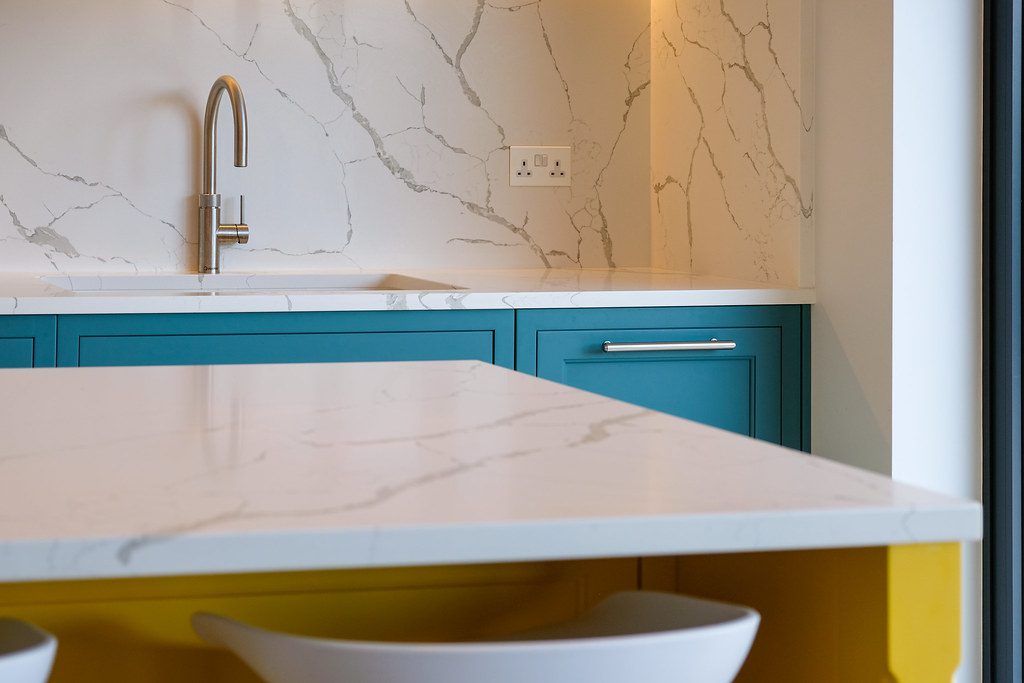
Quartz is worth considering for suitable vanity applications because it is low-porosity and generally straightforward to maintain when cleaned according to the manufacturer’s instructions. Natural marble offers distinctive veining and character but needs greater care around acidic toiletries and cleaning products. Sintered stone provides further options, subject to the chosen product and fabrication requirements.
If you are starting with an existing vanity cabinet, check that it is sound and can support the proposed surface. Basin type, tap position, overhang and access to plumbing all influence the design. A slim-looking top can feel elegant, but its thickness and edge treatment must suit the material and installation.
Explore the possibilities on our quartz bathroom surfaces and marble bathroom surfaces pages.
Use one statement surface rather than several competing finishes
A compact bathroom can feel busy when every wall, tile and fitting is trying to make an impression. Instead, consider allowing one stone feature to lead the design. A warm marble-effect vanity top against simple cabinetry may be enough. Alternatively, a stone-clad wall behind a basin can provide visual interest without adding objects to the room.
The 2026 UK Houzz Bathroom Trends Study reported that 36% of its surveyed renovating homeowners were adding or updating a bathroom accent wall. This is a useful indication of interest in focal-point design, not proof that stone is the most popular choice.
Choose a colour that supports the room
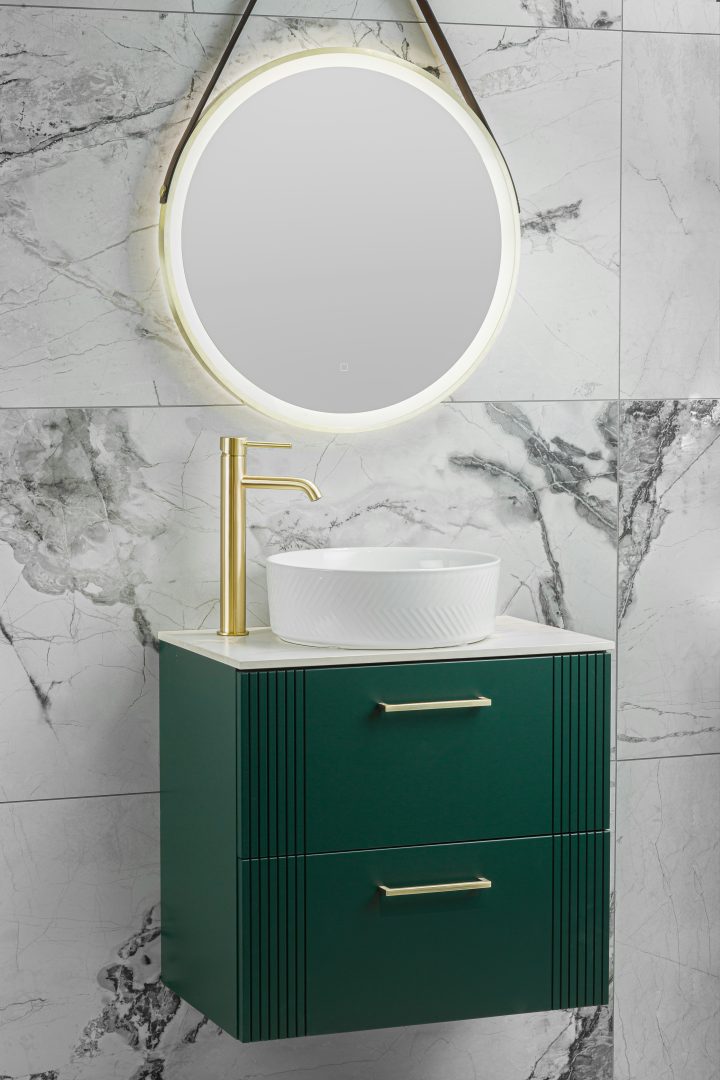
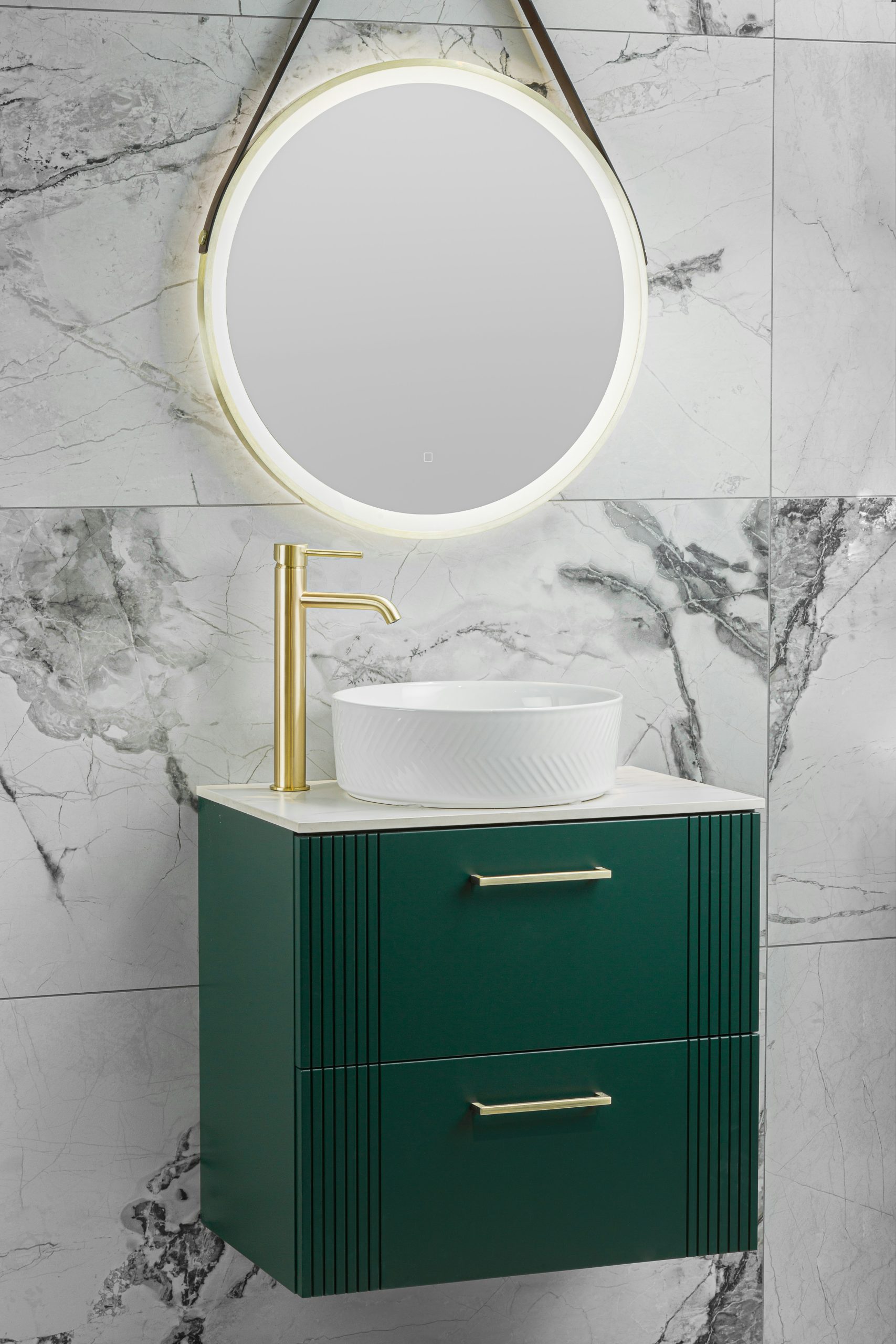
White and pale stone can help maintain a light appearance, but darker colours are not automatically unsuitable for small spaces. A deep green or richly veined surface can create contrast and character, especially when paired with simple cabinetry and good lighting. The right decision depends on natural light, wall finishes and the atmosphere you want to create.
Think about how the stone relates to the basin, taps and cabinet rather than judging a sample in isolation. Creamy whites often work well with warm timber and brass finishes; cool greys may complement chrome and painted cabinetry. Natural stones vary from slab to slab, so view the actual material wherever possible.
Add useful storage with a bespoke stone shelf
Small bathrooms often lack space for furniture, which makes wall-mounted shelves and narrow ledges especially valuable. A bespoke stone shelf above the basin or beside the bath can provide a practical home for everyday items while repeating the finish of the vanity top.
A recessed shower niche can also reduce the need for hanging caddies. However, niches in wet areas need appropriate structural support, waterproofing, falls and joint detailing. The decorative stone does not replace a waterproofing system. If the room is very small, even a shallow ledge can make a difference without reducing circulation space.
Do not forget the windowsill
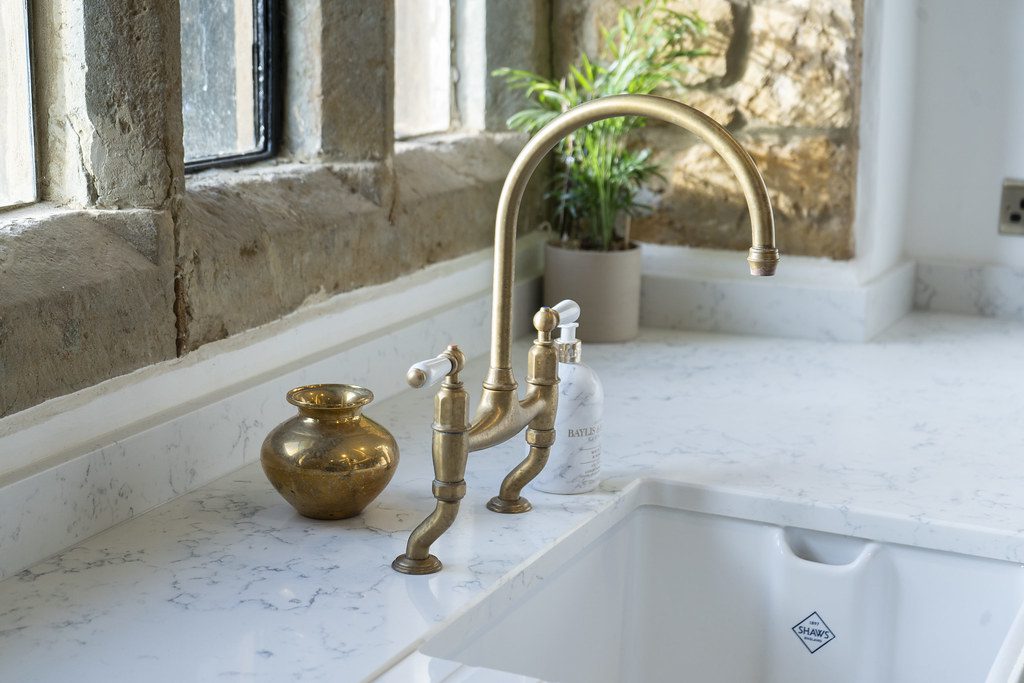
A bathroom windowsill has to cope with condensation, cleaning and the occasional splash. Stone can be a practical and attractive finishing detail when the material is suitable for the location. Matching it to the vanity top helps connect the room visually, even when the two surfaces are separated.
A carefully measured stone sill can also make an older window reveal look more intentional. In period properties or rooms with uneven walls, accurate templating and attention to the junctions are particularly important.
Could an offcut be the perfect solution?
For a small cloakroom or en-suite, a full slab may be unnecessary. An offcut left from a larger project might be the right size for a vanity top, sill or shelf. It can be a sensible way to use an existing piece of stone, although suitability depends on its dimensions, condition, colour and the cuts required.
Offcuts are not a standardised catalogue: the available selection changes, and some shapes or materials are not suitable for every design. Ask to see what is currently available rather than planning around a particular colour without checking stock.
What about stone shower panels?
Large-format stone or sintered stone wall panels can create a calm, continuous look with fewer visible grout joints than small tiles. In a compact shower, this may make the space feel more unified. But panel size, access to the bathroom, wall preparation, substrate suitability and waterproofing must all be considered.
Our sintered stone bathroom page provides a starting point for exploring materials. Not every worktop slab or finish is approved for shower use, so product-specific technical guidance matters.
Small space, careful details
The best compact bathrooms use space deliberately. A bespoke top that fits the cabinet properly, a shelf at the right depth and a restrained material palette can make the room feel more considered without major structural changes. Stone is not the only answer, but it can provide a lasting focal point where a small amount of material makes a noticeable difference.
Whether you are updating a cloakroom or planning a full en-suite renovation, visit The Granite House showroom to compare surfaces and discuss bespoke sizes. We can also advise on the suitability of available offcuts for smaller project.