For years, the standard approach to kitchen worktops was relatively simple: stone across the work surfaces, a small matching upstand and perhaps a splashback behind the hob.
That’s changing.
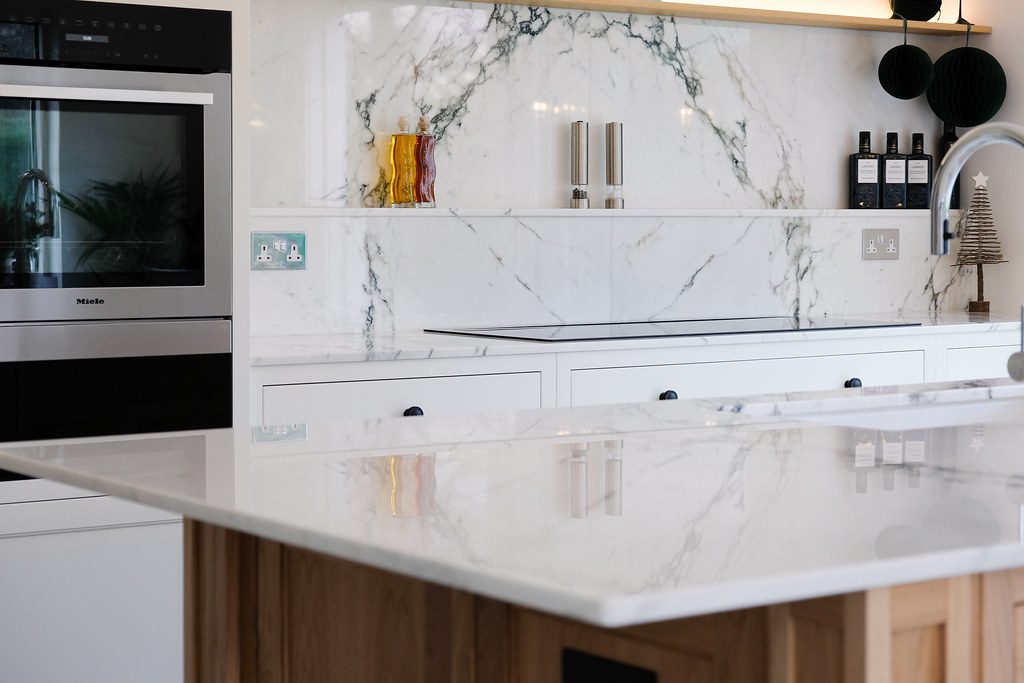
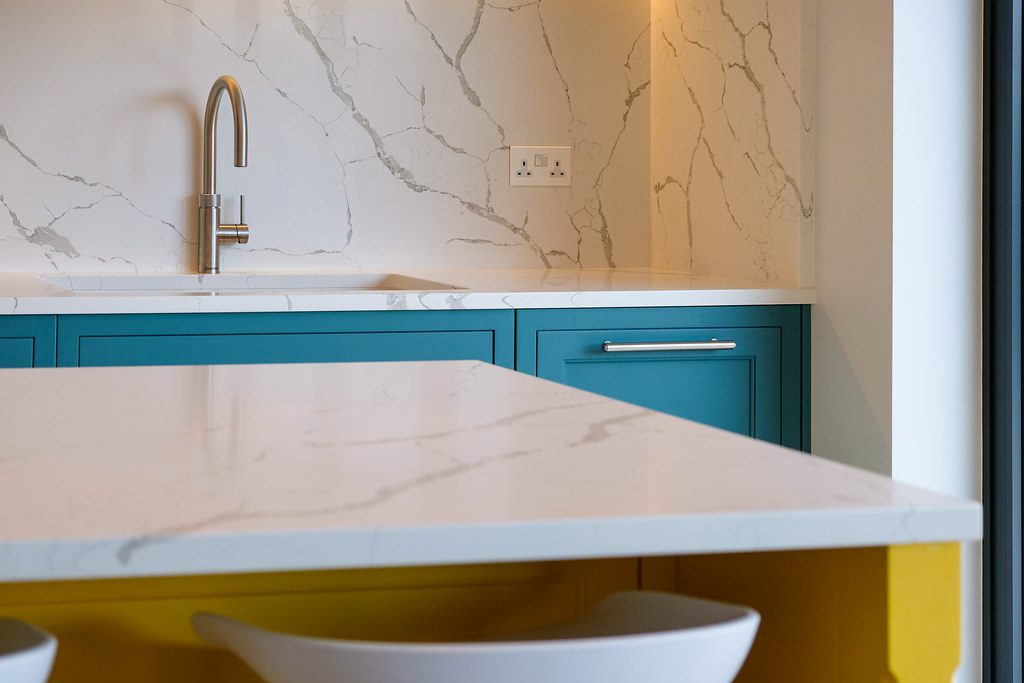
We’re increasingly seeing customers take their chosen stone much further, continuing it vertically from the worktop and using it to clad the wall above.
Known as full height cladding or a full height stone splashback, it’s a relatively simple design decision that can completely change the appearance of a kitchen.
Instead of the worktop finishing at the wall, the stone becomes part of the architecture of the room.
And it’s easy to understand why this look has become so popular.
What Is Full Height Stone Cladding
Full height stone cladding simply means continuing the worktop material vertically up the wall rather than finishing with a traditional upstand.
How far it extends depends on the kitchen.
Your might take the worktop:
- From the worktop to the underside of the wall cabinets
- Behind the hob and up to the extractor
- Around a window
- Across an entire worktop run
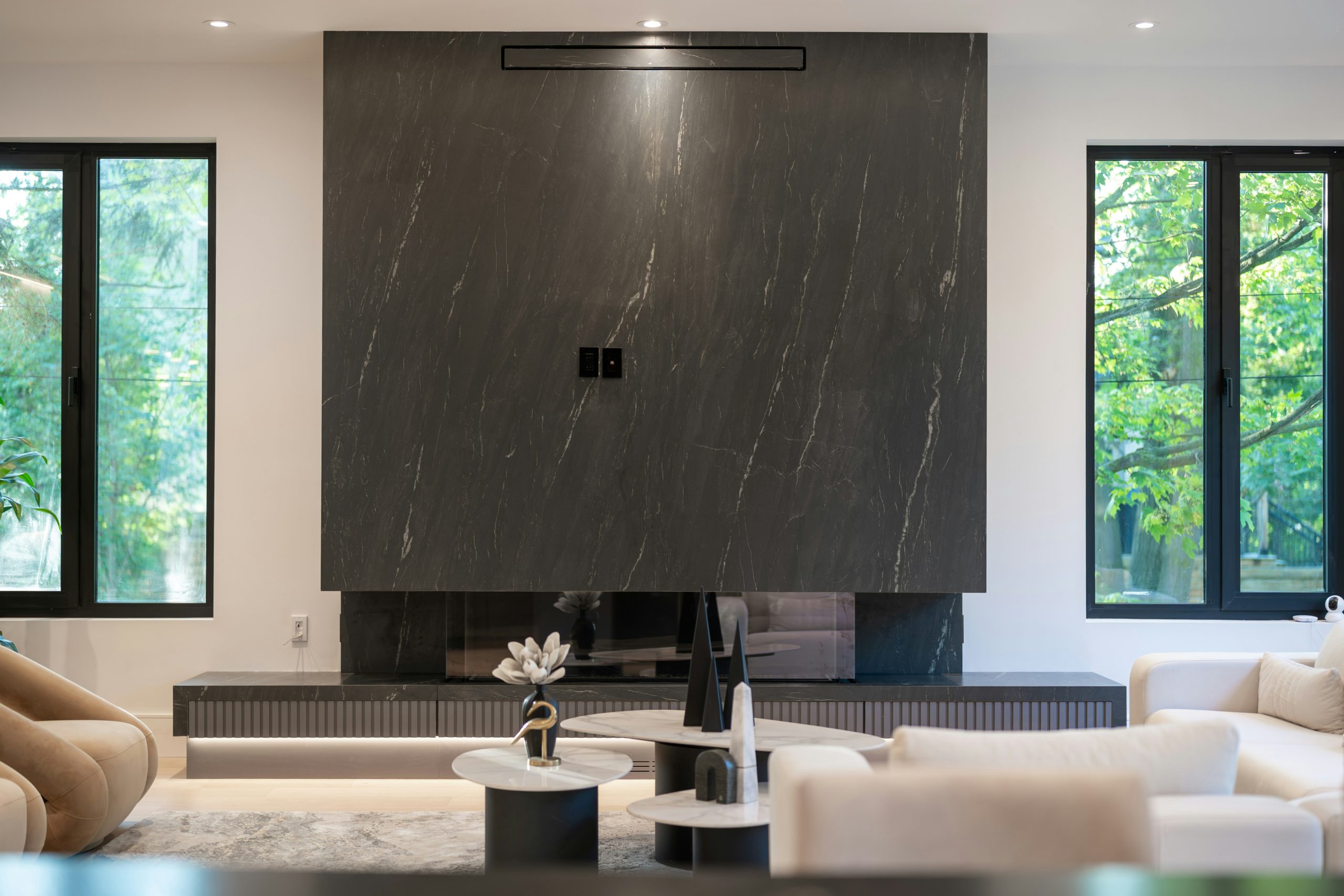
- Right up to the ceiling in a more dramatic design
It can cover one carefully selected area or become a defining feature throughout the kitchen.
Why Are We Seeing More of It?
Part of the appeal comes from a shift towards simpler, more cohesive kitchen design.
Instead of combining cabinetry, worktops, tiles, grout lines, paint and several decorative finishes, customers are reducing the number of material they us.
Continuing the worktop onto the wall achieves exactly that.
The same colour, veining and texture flows from one surface to another, creating a design that feels calmer and more considered.
It particularly effective in open plan kitchens where reducing visual clutter can help the room sit more comfortably alongside living and dining areas.
It Allows the Stone to Become a Design Feature
One of the biggest changes we’ve seen in recent years is the way customers think about their worktops.
The surface isn’t simply a practical element anymore. Increasingly the stone is the design feature.
This becomes particularly striking with surfaces that have distinctive veining or movement.
A beautiful pattern may look impressive horizontally across a worktop but, continuing it vertically creates a much larger canvas.
This approach works particularly well behind a hob or across a long run of cabinetry, where the stone can provide impact without introducing another colour or material.
The Beauty of Continuity
Full height cladding can also make the kitchen feel more seamless.
Using the same surface for both the worktop and the wall removes the visual break you would normally create by introducing tiles or another splashback material.
The eye simply follows the stone upwards.
Where the material has noticeable movement, careful planning can make this even more effective. The relationship between the worktop and vertical pieces can be looked at before fabrication so that patterns continue and feel intentional.
It’s one of those details that, planned well, can immediately jump out at you when you walk into the room.
Fewer Grout Lines, Easier Cleaning
There is also a very practical reason to choose stone cladding.
No grout lines.
Behind a hob or food preparation area, tiled splashbacks inevitably collect cooking debris around the grout.
A large-format stone surface creates a continuous area to wipe clean.
For busy kitchens, that’s a considerable advantage.
Design and practicality don’t always go hand in hand but in this case they do.
It Doesn’t Have to Cover Every Wall
Full height cladding doesn’t mean wrapping the entire kitchen in stone. In face, the most successful designs use it selectively.
You might choose full height behind the hob whole using simple upstands everywhere else.
Alternatively you could choose one feature wall and allow the remaining to stay relatively understated.
The right amount depends on:
- The size of the kitchen
- The pattern of the stone
- The cabinetry
- The amount of natural light
A heavily veined material across every wall could overwhelm a smaller kitchen, while the same surface used strategically behind the hob could become a defining feature.
Full Height Cladding and the Invisible Kitchen
This trend also fits beautifully with another design direction we’re seeing. The invisible kitchen.
As appliances become more integrated, extraction becomes more discreet and cabinetry becomes simpler, kitchens are beginning to feel more design driven.
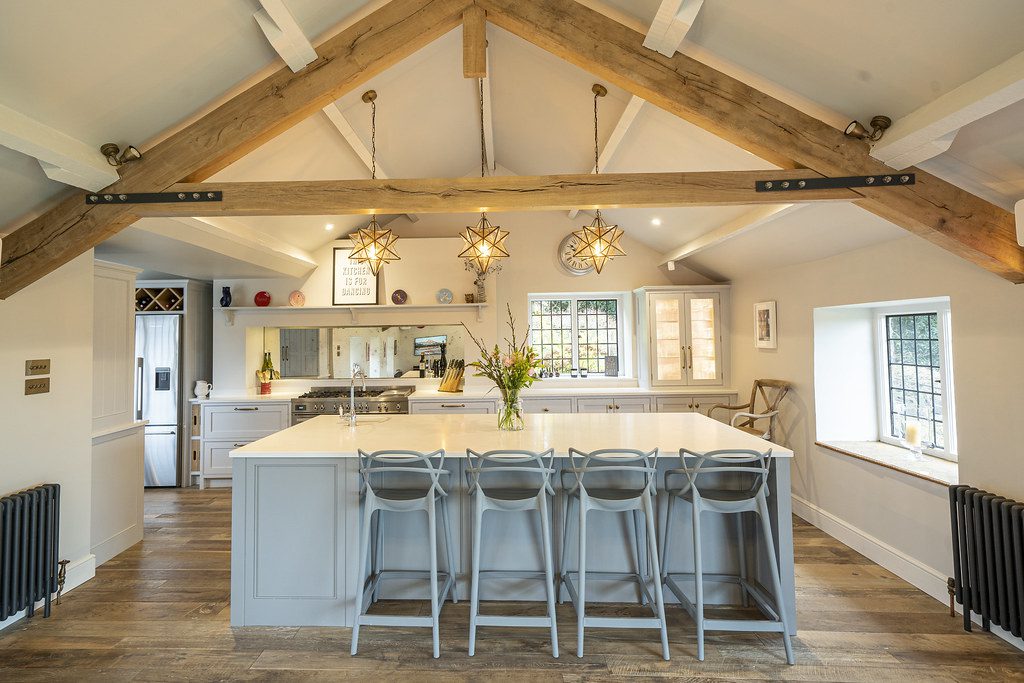
The invisible kitchen could be a coffee station or breakfast pantry and continuing the stone cladding in this area makes it feel an integrated part of the design.
Choosing the Right Stone
Not every surface creates the same effect when taken vertically.
A subtle stone can provide a quiet backdrop. A strongly veined surface can turn the wall into a statement. A darker stone can create dramatic contrast against lighter cabinetry.
And this is where seeing the material a full scale becomes particularly important.
A small sample might show you the colour, but it won’t necessarily show how the pattern will look across a larger surface.
If you’re considering full height cladding, we recommend looking at larger samples or full slabs and thinking about the worktop and the wall together, rather than treating them as two separate decisions.
Plan Early
Full height cladding is something worth considering early in your kitchen design.
Sockets, wall units, shelves, extractors and windows can all affect how the stone needs to be templated and fabricated.
Thinking about the cladding before the kitchen is finalised gives you more opportunity to create clean lines and carefully considered details.
It’s another reason we encourage customers to speak to a stone fabricator before every other kitchen decision has been set in stone, if you forgive the expression.
Is Full Height Cladding Right for Your Kitchen?
Like every design choice, it won’t suit every project.
If you love decorative tiles or want to introduce contrasting texture, a traditional splashback might be an important part of your design.
But if you’re looking for something cleaner, more continuous and architectural, extending your worktop material onto the wall is certainly worth considering.
It can make a relatively simple kitchen feel significantly more considered without adding another colour, pattern or finish.
From Work Surface to Feature Surface
For us this is what makes this trend really interesting.
Stone has traditionally been viewed as a work surface. Full height cladding changes that.
The same material still performs its practical role across the worktop, but vertically it becomes part of the interior design.
If you are planning a new kitchen and considering a full height stone splashback, visit our showroom in Bicester. Our team can show you different materials and talk you through how the worktops, veining and wall cladding could work together in your space.