When you think of stone surfaces, kitchen worktops probably come to mind first. But stone can also be used beautifully in the bathroom.
From elegant marble vanity tops to contemporary walk-in showers, stone can transform
transform an ordinary bathroom into a space that feels carefully designed, luxurious and practical.
And you don’t need an enormous bathroom or a complete renovation to introduce it.
At The Granite House we work with quartz, marble, granite and sintered stone to create bespoke bathroom surfaces, from vanity units and bath surrounds to shower wall cladding and shelving.
Here are seven ways to bring stone into your bathroom design.
1. Create a Beautiful Bathroom Vanity Top
A stone vanity top is one of the simplest ways to introduce a premium finish into your bathroom.
Whether you have a traditional vanity cabinet, a contemporary wall-hung unit or a bespoke piece of furniture, a stone surface can provide the perfect finishing touch.
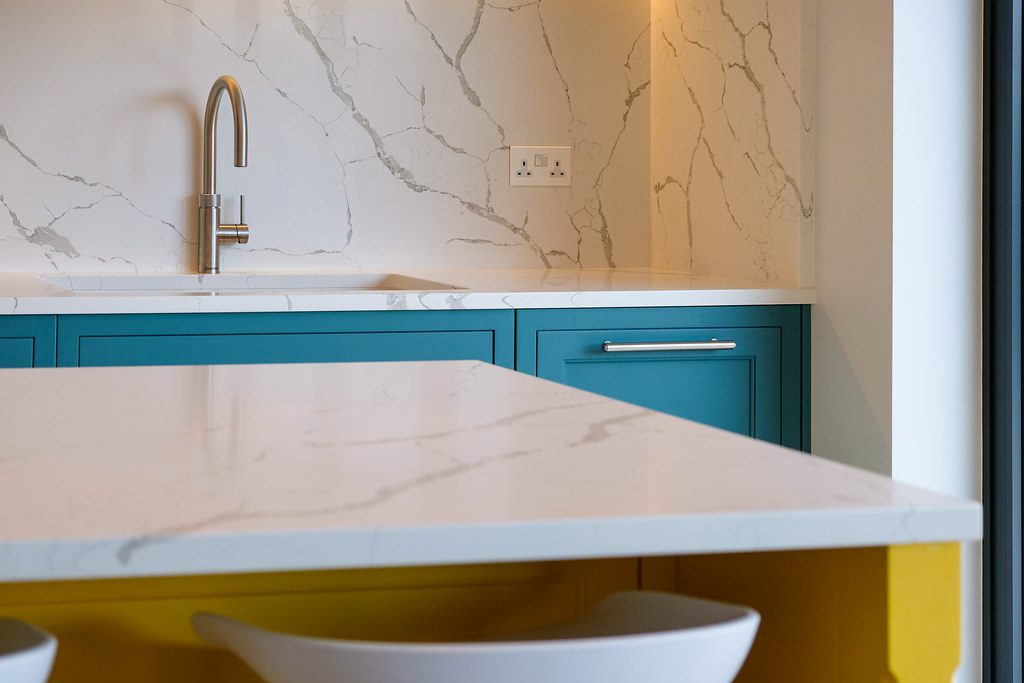
Quartz bathroom worktops are a practical option because they are low maintenance, have low porosity and come in a wide range of colours and patterns.
Marble bathroom vanity tops offer something different. Their natural veining and individual character can create a particularly elegant look, although marble requires more careful maintenance.
For a contemporary bathroom, consider a slim stone vanity top paired with a countertop basin. For something more traditional, a marble-effect surface can complement Shaker-style cabinetry and classic brassware.
Design idea: Extend the stone slightly beyond the vanity cabinet to create a useful surface for toiletries, or add a matching upstand to protect the wall behind the basin.
2. Replace Traditional Shower Tiles with Large-Format Stone Panels
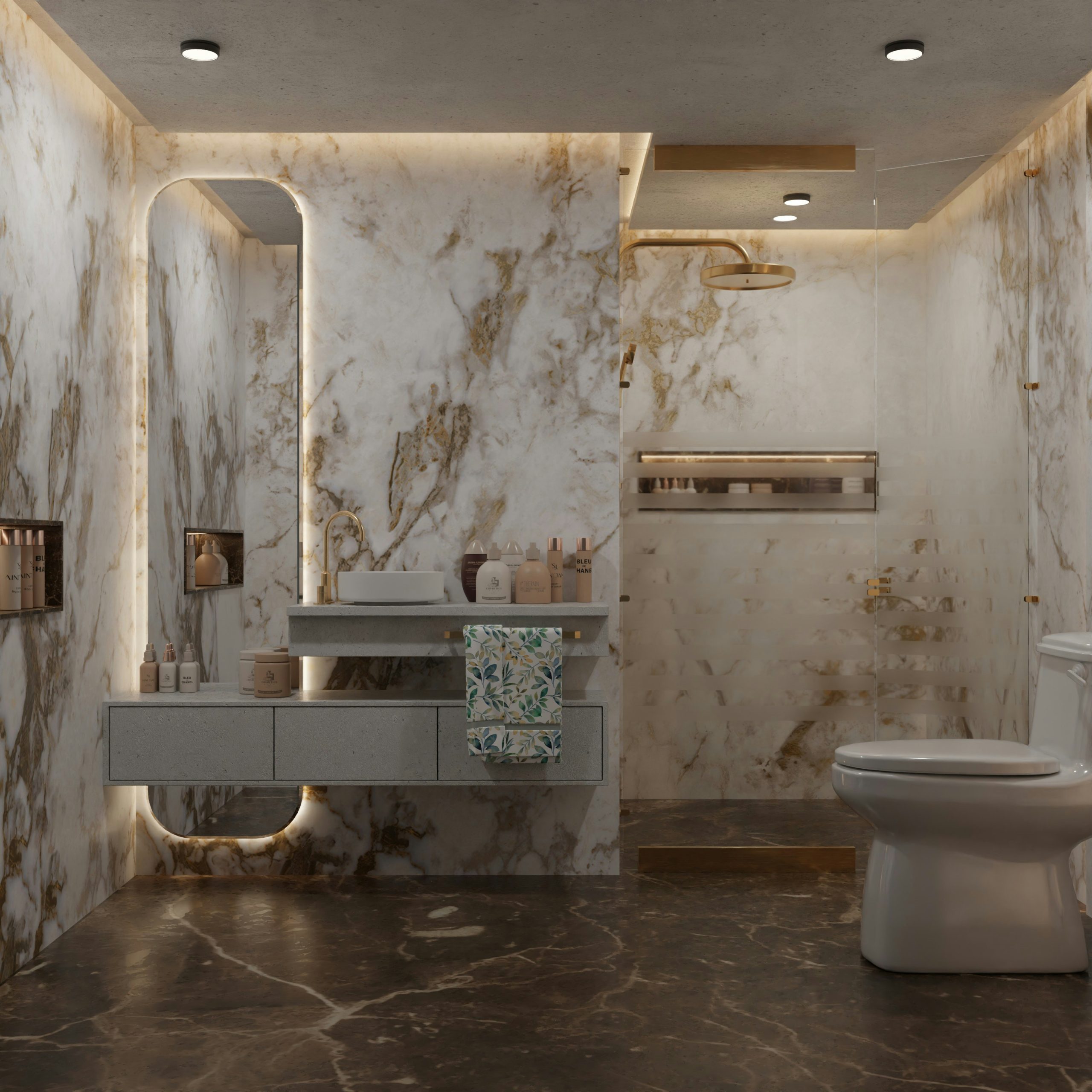
If there’s one bathroom application that deserves more attention, it’s stone shower wall cladding.
Traditional shower enclosures often involve numerous tiles and grout lines. Large-format stone panels create a more continuous appearance, with fewer visible joints.
The result can make a shower feel cleaner, calmer and more spacious.
There are practical advantages, too. Fewer grout lines mean fewer areas where soap residue and discolouration can accumulate.
Sintered stone bathroom surfaces, including Dekton, are particularly interesting for this application because of their low porosity and availability in large-format slabs.
Manufacturer Cosentino demonstrates how these materials can transform bathrooms through its large-format bathroom cladding collection.
Its specialist Dekton formats include thinner panels designed for wall cladding, allowing larger areas to be covered with fewer joints.
Design idea: Use the same stone across two or three shower walls to create a cohesive look, or choose a dramatic marble-inspired design for a statement shower enclosure.
Remember that stone cladding is a surface finish, not a substitute for proper waterproofing. Shower walls still require an appropriate waterproofing system, correctly detailed joints and professional installation.
3. Make a Feature of Your Bath Surround
A freestanding bath can look beautiful on its own, but a built-in bath offers another opportunity to introduce stone.
Cladding the bath panel or surrounding deck in a complementary stone can turn a practical fixture into a deliberate design feature.
Light marble-inspired surfaces can create a soft, elegant appearance, while darker stone introduces contrast and a more contemporary feel.
You can also coordinate the bath surround with your vanity top or shower walls.
Cosentino’s bathroom design collection illustrates how stone can be used across multiple elements, from vanity tops to wall cladding and bath surrounds, creating a consistent design throughout the room.
Design idea: Repeat the same stone in two places, such as the vanity top and bath surround, rather than using a different material for every surface.
The installation must retain suitable access for plumbing and accommodate the bath manufacturer’s requirements.
4. Introduce Bespoke Stone Shelving and Shower Niches
It’s often the smaller details that make a bathroom feel considered.
Stone shelving can provide useful storage while introducing a premium finish.
Think about a narrow shelf above the basin, a ledge behind a freestanding bath or a recessed niche inside the shower for shampoo and toiletries.
Using the same material as the surrounding walls can create a beautifully integrated look.
Alternatively, a contrasting stone shelf can add interest without overwhelming the room.
Because stone can be cut and finished to precise dimensions, bespoke shelving is also a useful way to make the most of awkward spaces.
Design idea: A recessed shower niche finished in the same stone as the shower walls creates practical storage without interrupting the overall design.
In wet areas, shelves and niches need suitable support, waterproofing and drainage detailing to prevent water collecting.
5. Use Stone to Create a Statement Wall
Stone doesn’t have to cover every surface to make an impact.
A single feature wall can become the focal point of your bathroom.
This works particularly well behind a freestanding bath or a large vanity unit, where the pattern and movement of the stone can be appreciated.
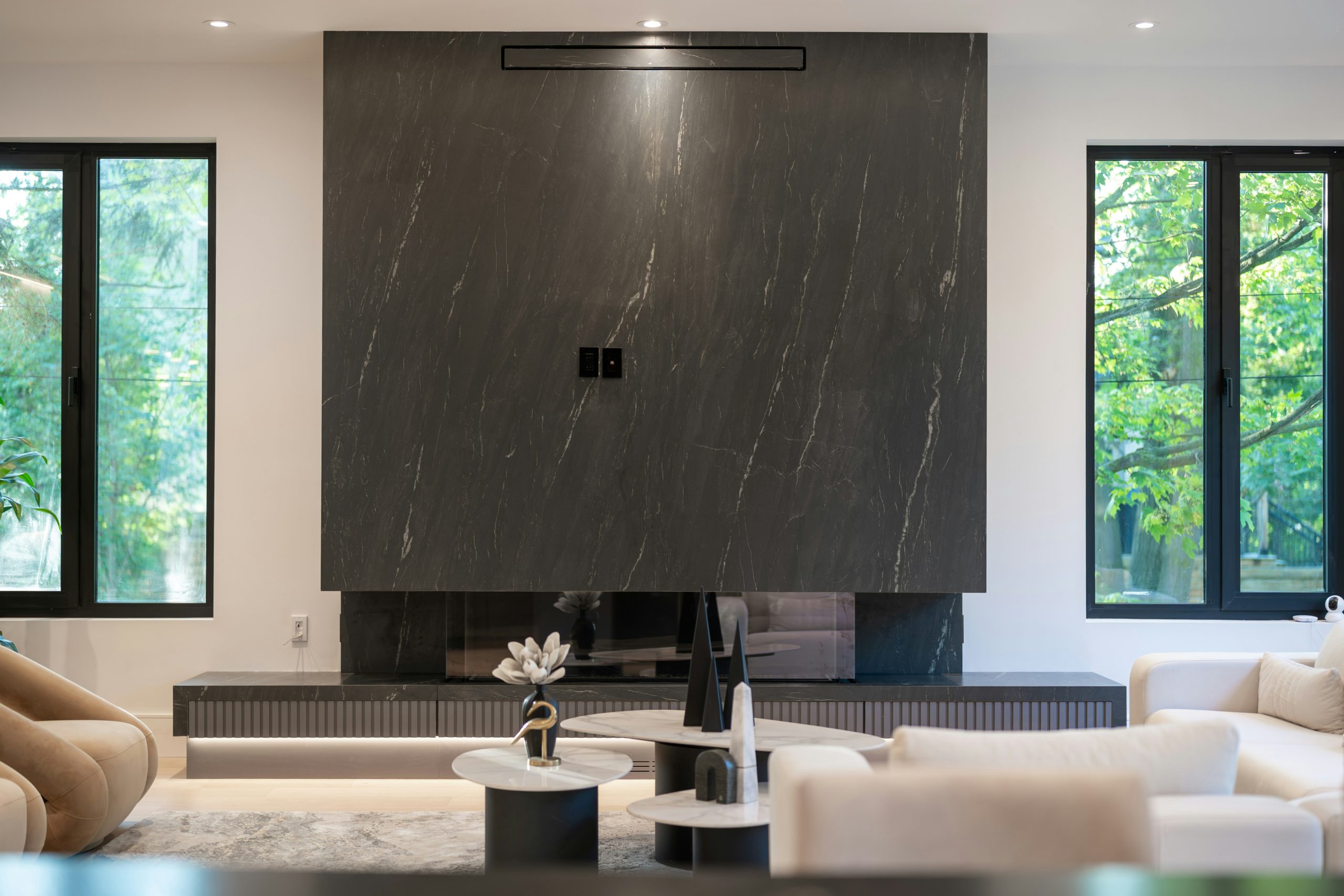
For a dramatic look, consider a strongly veined marble or marble-inspired sintered stone.
If you prefer a softer bathroom design, choose a warm neutral surface with subtle movement.
Large-format panels can help create an uninterrupted appearance, although the final layout and number of joins depend on slab dimensions and access to the room.
Cosentino’s Dekton bathroom cladding collection offers examples of how large-format surfaces can create striking feature walls while minimising visible joints.
Design idea: Keep the surrounding walls simple and allow the stone to provide the visual interest.
6. Consider Stone Flooring for a Coordinated Finish
Stone flooring can create a beautiful connection between different elements of a bathroom.
Natural stone brings individual character, while some sintered stone products offer a contemporary alternative.
However, choosing stone for a bathroom floor involves more than selecting a colour.
Slip resistance is particularly important, especially in wet areas.
Not every polished stone or worktop surface is suitable for flooring. The material, finish and installation system must be appropriate for the intended application.
For example, Cosentino offers Dekton bathroom flooring with its Grip+ slip-resistant treatment, specifically developed for applications where grip is important.
Design idea: Use complementary tones on the floor and vanity rather than trying to match every surface exactly.
7. Give a Small Bathroom a Luxury Finish with Stone Offcuts
You don’t need a large bathroom to enjoy the beauty of stone.
In fact, smaller projects can be an excellent opportunity to use stone offcuts.
An offcut is a piece of stone remaining from a larger slab. Depending on its dimensions and condition, it may be suitable for a vanity top, windowsill, shelf or other small bathroom feature.
This can be a cost-effective way to introduce a premium material without purchasing a full slab.
It also helps make better use of existing stone.
Design idea: Consider a bespoke stone top for a compact cloakroom vanity. Even a relatively small surface can make a significant difference to the overall appearance of the room.
At The Granite House, we have a large selection of offcuts available for smaller projects. You can visit our Bicester showroom to explore what is currently in stock.
Which Stone Is Best for a Bathroom?
Different materials offer different benefits, and the best choice depends on where the stone will be used.
Quartz is a practical choice for vanity tops, windowsills and other suitable bathroom surfaces. Its low porosity makes it relatively easy to maintain, although the manufacturer’s guidance should be checked before using a particular product in a continuously wet area.
Explore our quartz bathroom surfaces.
Marble brings natural beauty and individual character. It’s particularly attractive for vanity tops and decorative features, but it can be sensitive to acidic products and may require sealing and specialist care.
Discover our marble bathroom worktops.
Granite offers natural variation and durability. Some varieties are suitable for bathroom applications, although porosity, finish and maintenance requirements differ.
Find out more about our granite bathroom surfaces.
Sintered stone, including Dekton, offers low water absorption and a wide range of design options. Selected products and finishes can be used for shower walls, bathroom cladding and other wet-area applications.
Explore our sintered stone bathroom surfaces.
The important thing is to choose a material that’s suitable for its intended use, rather than assuming that every stone will perform in the same way.
Is Stone Difficult to Maintain in a Bathroom?
Not necessarily.
Many engineered and sintered stone surfaces are straightforward to clean using appropriate mild cleaning products.
Natural stone may need more attention, particularly if it is exposed to acidic toiletries, limescale removers or harsh bathroom cleaners.
For all stone surfaces, follow the manufacturer’s recommended cleaning instructions and avoid assuming that a product suitable for ceramic tiles will also be safe for stone.
And while large-format shower panels reduce the number of grout lines, joints and seals still need routine inspection and maintenance.
Make Your Bathroom Something Special
A beautiful bathroom doesn’t necessarily need elaborate fixtures or an enormous budget.
Sometimes, it’s the materials that make the difference.
A bespoke vanity top, a carefully detailed shower enclosure or a simple stone shelf can bring character, practicality and a more considered finish to the space.
At The Granite House, we have over 20 years’ experience working with natural and engineered stone. Our team can help you explore the possibilities for bathroom vanity units, shower wall cladding, bath surrounds and smaller bespoke features.
Planning a bathroom renovation? Speak to our stone specialists or visit our Bicester showroom to compare materials and discuss your ideas.
Already have a bathroom plan? You can also request a quotation.
Because beautiful stone belongs in more than just the kitchen.