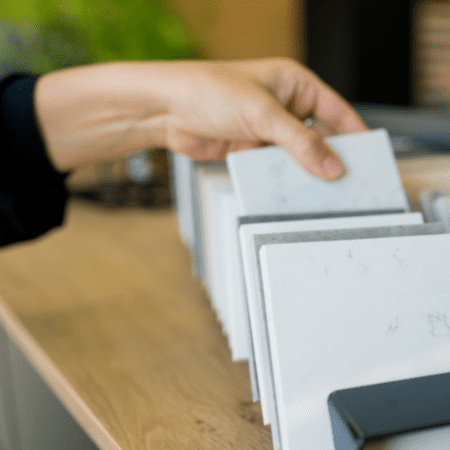
Quartz worktops have become one of the most popular options for modern kitchens as they offer durability, consistency, and a wide range of colours and finishes.
And because many quartz surfaces look similar at first glance, it’s easy to assume they’re all the same.
They are not.
Differences in composition, manufacturing, finishing and fabrication can all affect how a quartz worktop looks and performs over time. Understanding these differences helps you choose a surface that doesn’t just look good on day one but continues to perform well for years,
What Quartz Worktops Are Made From
Quartz worktops are engineering surfaces made from:
- Natural quartz crystals
- Resin and binders
- Pigments
Manufacturers combine these materials under pressure to create a dense, durable surface.
However, the ratio and the quality of these ingredients can vary. Higher quality stone typically uses a higher proportion of natural quartz and more consistent manufacturing processes resulting in a more stable surface.
Differences in Appearance
At first glance, two quartz worktops may look identical in a small sample. When the stone is installed the differences become more noticeable. These differences include:
- Depth of colour
- Clarity of pattern
- Consistency across slabs
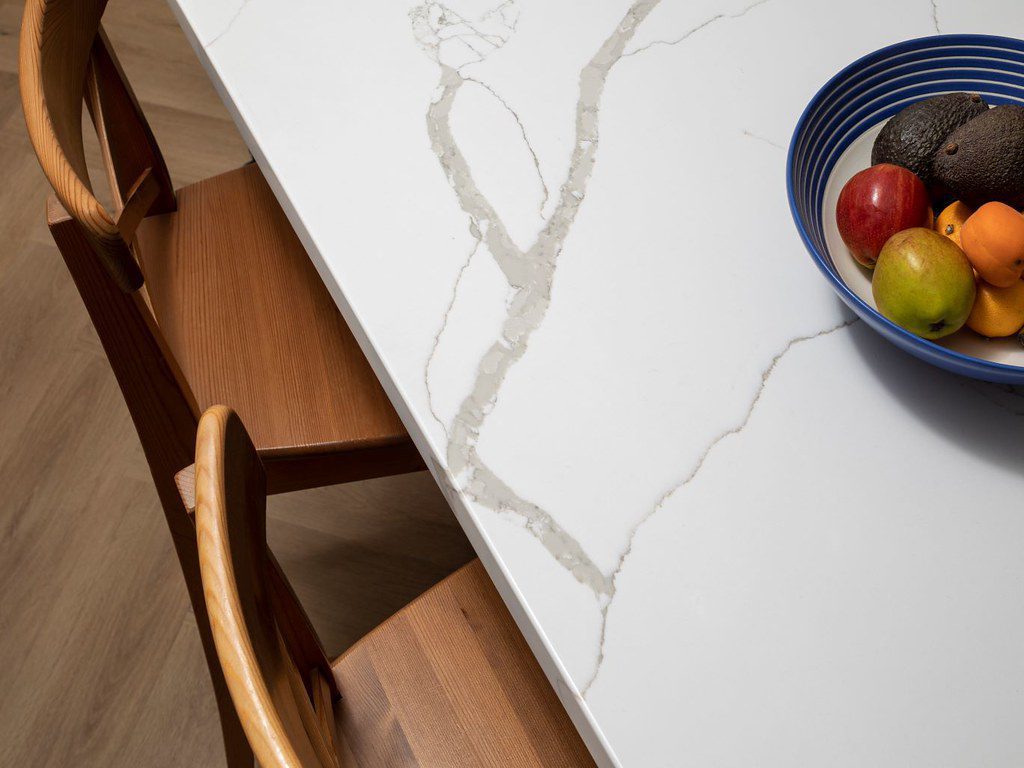
- Realism of veining
Some quartz surfaces have flat, uniform finishes while others replicate the movement and variation of natural stone. The quality of printing or pattern distribution plays a significant role in how convincing the final result appears.
Thickness & Structure
Quartz worktops are available in different thicknesses, commonly:
Thickness affects both appearance and installation.
Thinner worktops can create a sleek, modern look but may need additional support or special fabrication techniques. Thicker worktops provide a more substantial feel and can influence edge detailing.
The way a fabricator handles thickness – including mitred edges or built-up profiles – also affects the final result.
Surface Finishes & Textures
Quartz surfaces are typically available in:
- Polished finishes
- Honed or matte finishes
- Textured finishes
The finish changes how the worktop reflects light and how it feels to touch.
Polished surfaces reflect more light and highlight colour variation. Matte finishes create a softer, more understated look but marks may show up (think small children with stick fingers!).
Choosing the right finish depends on both design preference and how the kitchen will be used.
Durability & Performance
Quartz is known for how durable and low maintenance it is, but not all surfaces perform equally.
Difference in manufacturing quality can affect:
- Resistance to staining
- Resistance to heat
- Long-term colour stability
Higher quality quartz surfaces tend to perform more consistently, particularly in busy kitchens.
Fabrication Makes a Significant Difference
Even the highest quality quartz can look poor if it is not fabricated correctly.
Fabrication affects:
- Edge profiles
- Join quality
- Cut-outs for sinks and hobs
- Alignment and level
Clean joints and accurate cutting make the worktop seem seamless and more intentional. Poor fabrications can make even premium materials look unfinished.
Why Seeing Quartz in Person Matters
Because quartz varies in colour, finish and pattern, viewing it in person helps you understand how it will look in your home.
Showroom visits allow you to:
- Compare different materials side by side
- See larger samples or slabs
- Assess how light affects the surface
This steps helps avoid surprises after installation.
Choosing the Right Quartz for Your Kitchen
When selecting quartz, consider:
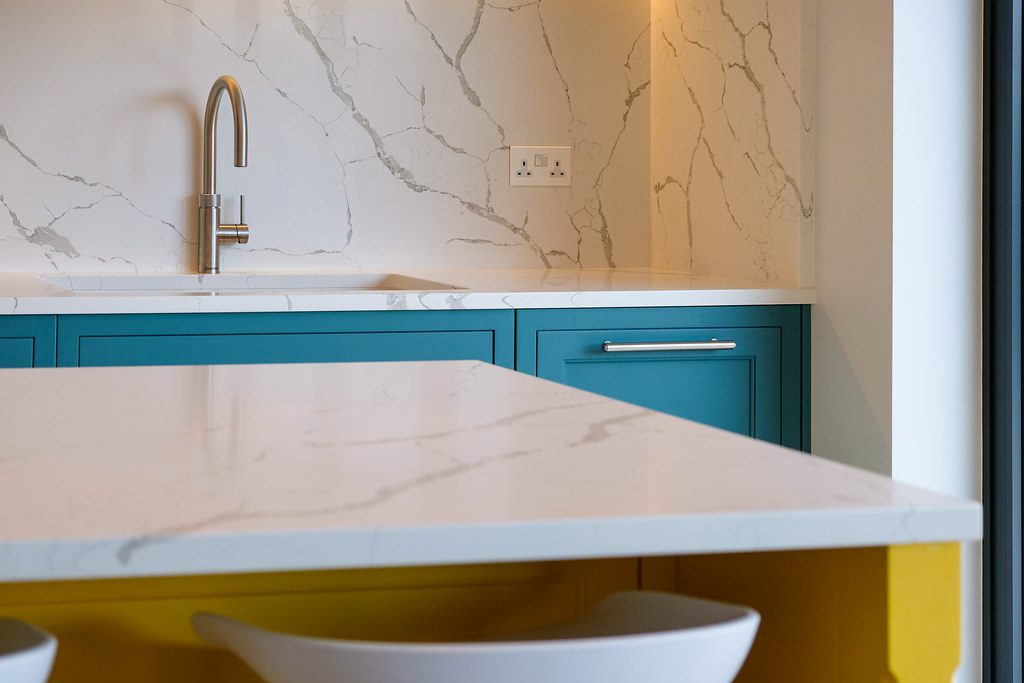
- How the colour works with your cabinets
- How the pattern fits with the scale of your kitchen
- How the finish suits your lifestyle
- Who will fabricate and install the worktops
The material and the workmanship both contribute to the final result.
Quartz worktops may appear similar at first glance, but difference in materials, manufacturing and fabrication can significantly affect the final look in your kitchen.
Choosing the right quartz involves more than just selecting the right colour. It need an understanding on how the surface will perform, how it will be fabricated and how it will fit within your kitchen.
With the right combination of materials and expertise, quartz will be a durable, consistent and premium surface that will last for years.