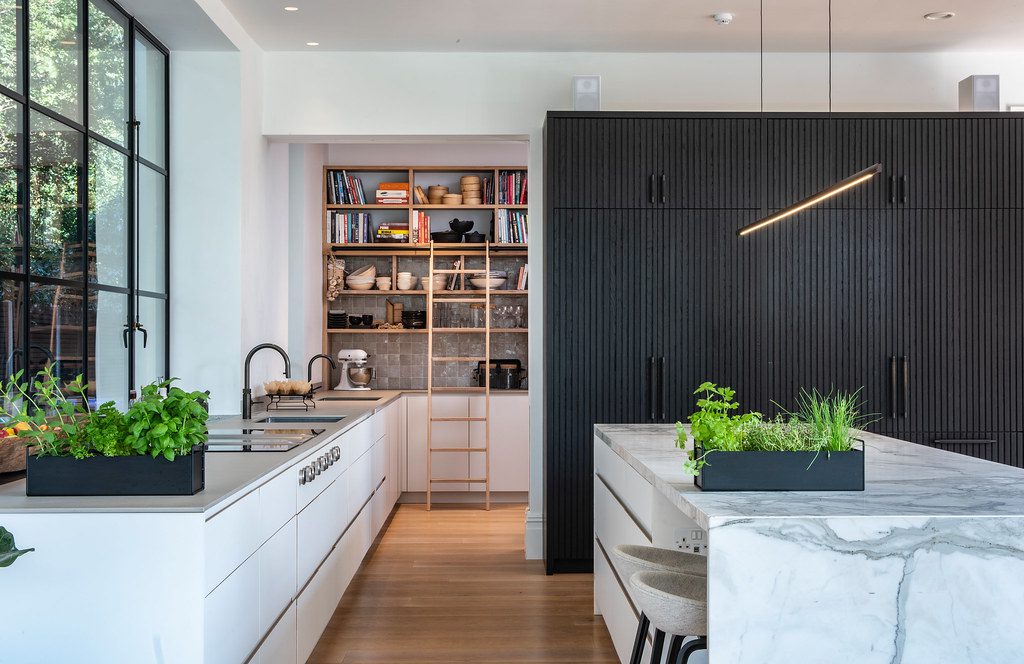
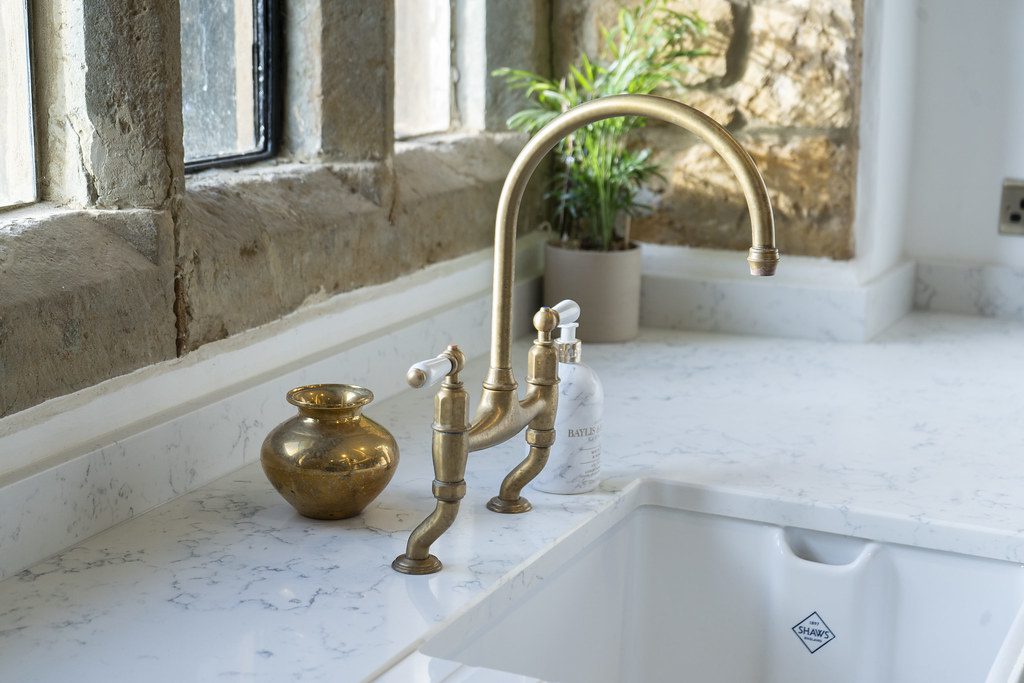
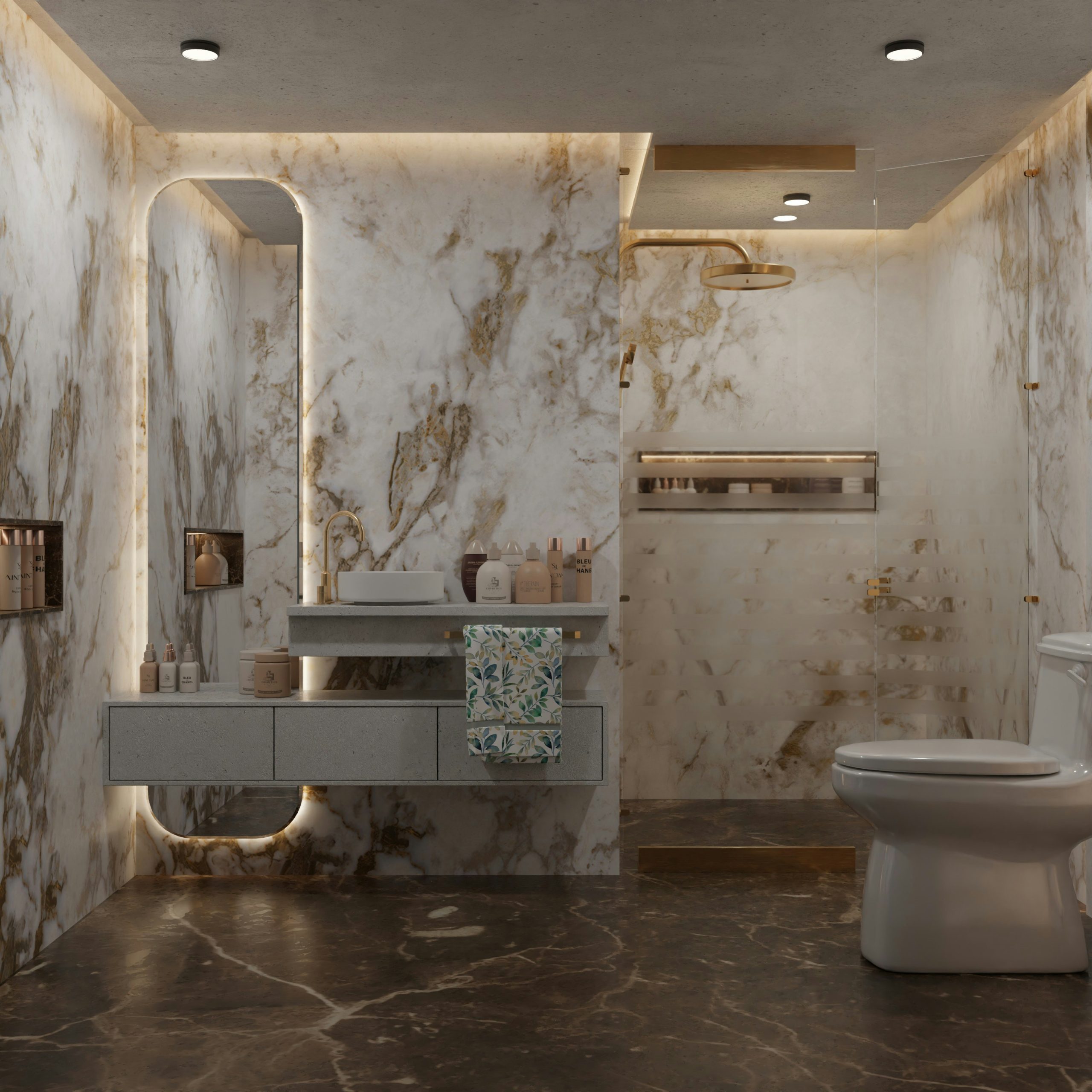
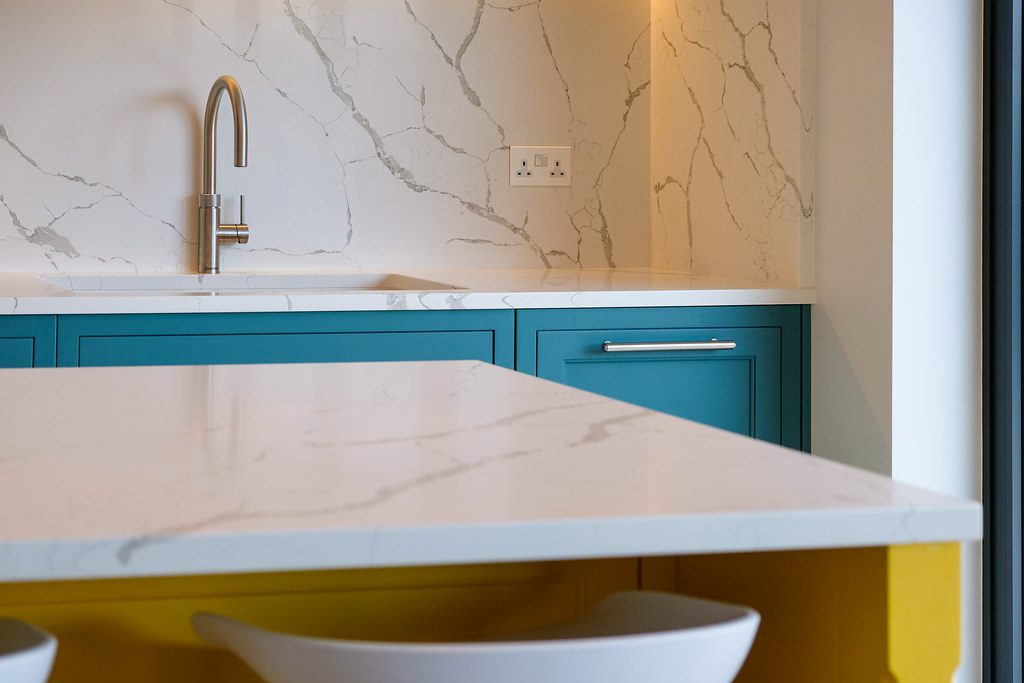
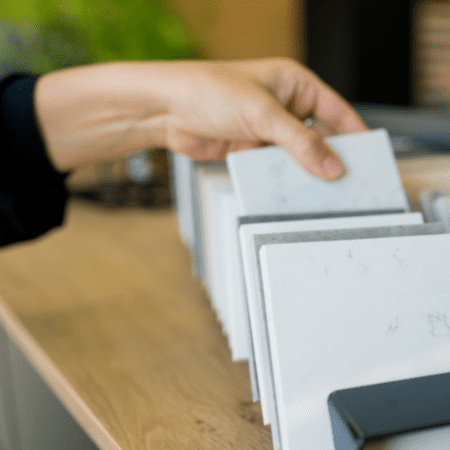
Sintered stone is one of the fastest-growing materials in kitchen and interior design, but many homeowners still aren’t entirely sure what it is, or how it differs from quartz, granite or marble. In recent years, it has moved from a niche architectural material to a mainstream choice for worktops, splashbacks and feature surfaces.
So what exactly is sintered stone, and why are more people choosing it?
The Low Down on Sintered Stone
Sintered stone is a manmade surface created using advanced manufacturing technology that replicates the natural processes that form stone in an accelerated format.
Manufacturers use a blend of:
- Natural minerals
- Clays
- Silica
- Other raw materials
These are compressed under extreme pressure and fired at high temperatures. The result is a dense non-porous surface with exceptional performance characteristics.
Unlike quartz, sintered stone contains no resins or polymers. It is entirely mineral based.
Why is It Becoming So Popular?
Sintered stone appeals to homeowner and designers who want high performance without compromising on aesthetics.
Exceptional durability
Sintered stone is:
- Highly scratch resistant
- Heat resistant
- UV stable
- Resistant to stains and chemicals
This means it is ideal for busy kitchens, outdoor kitchens and commercial environments.
Ultra-Thin Profiles
One of the standout features of sintered stone is its availability in thin formats, often 6mm or 12mm.
These thinner profiles allow for:
- Sleek, contemporary designs
- Large-format splashbacks
- Waterfall edges with minimal visual bulk
- Furniture cladding and wall applications
Because of this versatility, sintered stone is gaining traction in modern designs.
Low Maintenance
As sintered stone is non-porous, it doesn’t require sealing and won’t absorb liquids. Everyday cleaning is straightforward, making it a practical choice for households that want a surface that looks great with minimal upkeep.
Design Flexibility
Manufacturers can replicate:
- Natural marble veining
- Industrial concrete looks
- Uniform solid colours
- Bold expressive patterns
This allows homeowners to achieve high-end aesthetics with fewer of the maintenance concerns associated with natural stone.
Sustainability Credentials
Sintered stone is often considered a more sustainable surface options because:
- It is made from natural raw materials
- Many manufacturers use recycled content
- The process produces minimal waste
- The surface has a long life span
The absence of resins also makes it more stable at high temperatures and less chemically complex at the end of life.
How Does Sintered Stone Compare to Quartz and Natural Stone?
While quartz, granite and marble all have their place, sintered stone sits somewhere between engineered consistency and natural beauty.
- Compared to quartz it offers greater heat resistance and no resin content.
- Compared to granite it provides more consistent patterns and thinner options.
- Compared to marble is delivers similar aesthetics with far greater durability.
Is It For Every Kitchen?
Sintered stone is a premium material and needs specialist fabrication and installation. Its hardness means it must be handled carefully, particularly in thinner formats. That’s why it is important to work with an experienced fabricator who understands the material and has the correct tooling and processes.
How Can We Help?
With so many different stones it can be difficult to know which one is right for your project and that’s where we come in. Our friendly team are experienced at dealing with everything from marble and granites to quartz and sintered stone. They will happily listen to your requirements and provide advice on the stone that will suit your design and lifestyle.