In this blog we will give you a guide on which jobs you can get on with first, helping you to avoid potential mishaps.
The first stage, other than choosing your granite, quartz or marble kitchen worktops, is templating. This is the day important measurements are taken.
Once this is completed and agreed by you, we can move on to fitting.
Should my kitchen wall cabinets be up before the worktops are fitted?
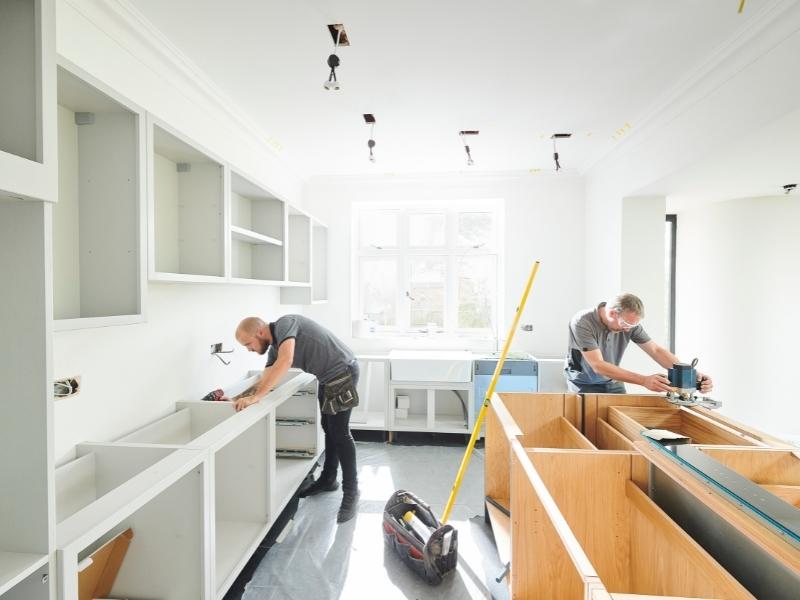
In short, yes. Ideally the walls will be clear of anything that could impede the template laser or reduce the manoeuvrability of the granite, quartz or sintered stone worktops. The large pieces of stone are very heavy and can be awkward to get into position. Of course, if the kitchen re-fit consists of worktops only, then it is not recommended that you remove the wall units or cooker hood in order to fit the stone worktops.
If the wall units and extractor fan have been fixed and there is a risk of damage to them, it will be necessary to protect them as best as you can. Before the fitters arrive for the templating measurements, the whole area will need to be free from other trades, dust, and objects such as dust sheets or kitchen accessories.
When can I tile the walls?
It is preferable to tile the walls last of all, unless you are laying a new floor. Floors are usually the last job in a kitchen re-fit, unless you require it to go right to the walls, rather than the front of the base units.
Protect your beautiful new stone worktops from splashed grout or dropped tiles by taping plenty of cloth across them. It is extremely difficult to damage the stone worktops that we supply, especially sintered stone such as Dekton or Lapitec, but if you do drop a tile, you will at least reduce the risk of wasting it!
In summary – Preparing for new kitchen worktops
The templating stage is the first time our fitters will visit your kitchen. This is the time when a laser measurement system will be used to get accurate measurements for the final worktops.
Please make yourself or your spokesperson available on this day and be prepared for this visit by following these guidelines as closely as possible:
- Remove old worktops
- Clearing area of people, objects and dust – all of which could affect the laser accuracy
- Base units in final position
- Sinks, hobs, taps and sockets and units that meet the surface, available for measuring but not in position
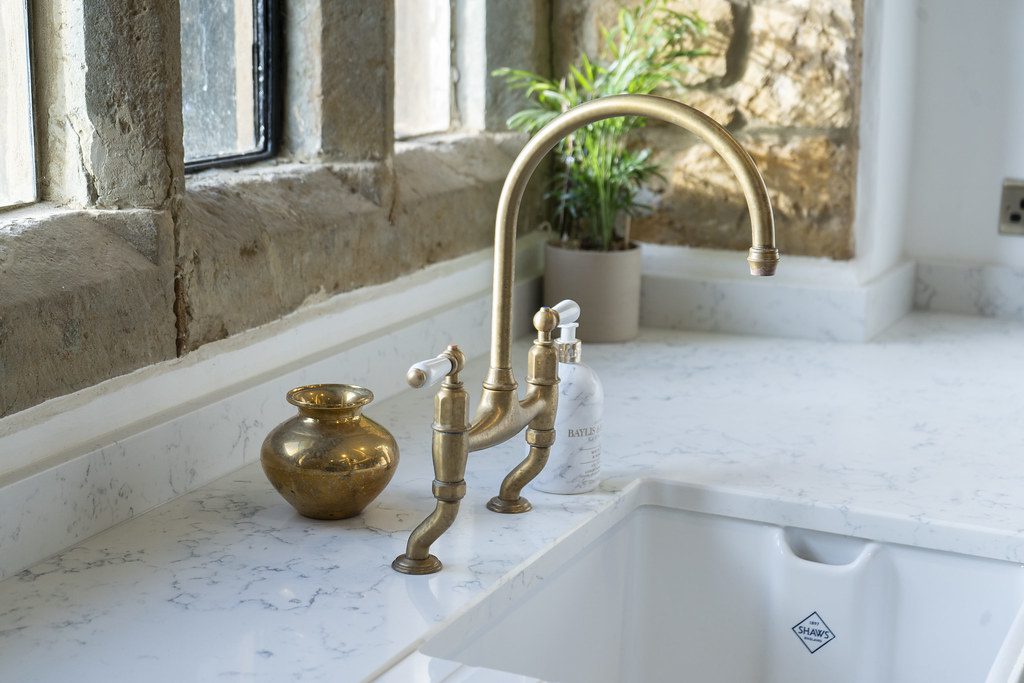
- Under-mounted sinks such as Belfast sinks and free-standing cookers such as AGA’s should be in final position
- Wall mounted extractor fans, including over hob units, to be in final position
- Plastering to be completed – not tiling.
With all these points taken care of, with a 3mm tolerance, our fitters can make the most accurate measurements for example, if the plaster is not complete, the worktops are likely to overhang at the front and if we are unable to take the sink measurements, even if it is not yet fixed, then the worktop may not be correct when we come to fit it.
Installation day
Before The Granite House comes to fit your new kitchen worktops, you need:
- Base units in position
- Oven in position
- No wall tiles, or protected with newspaper and tape
- Floors can be laid, if it is your preference – they will need protecting
- Other ‘white goods’ can be in position – if they do obstruct the fitters they may be temporarily re-positioned.
The Granite House is always happy to answer any questions you may have regarding the whole process of choosing and fitting your new kitchen worktops. Please feel free to call our office on 01869 324442 or email [email protected]
Alternatively call into our workshop and showroom: 42 Murdock Rd., Bicester OX26 4PP