Not so long ago, the dining table was were family life happened.
Meals were eaten there. Homework was completed there. Guests gathered around it. It was the natural centre of the home.
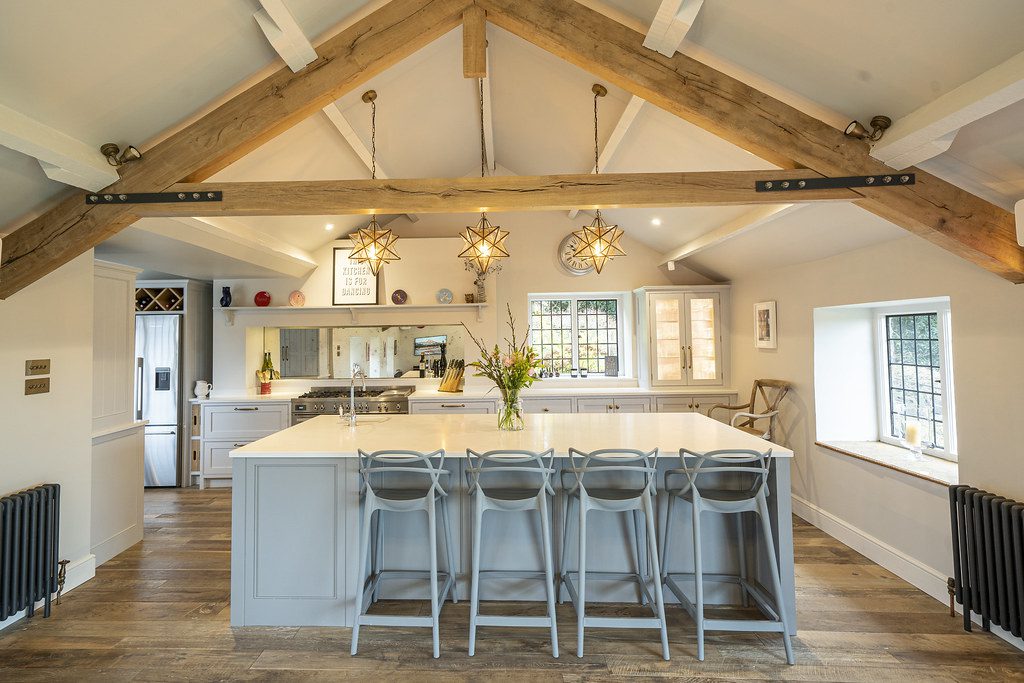
Today that role is increasingly being taken over by the kitchen island.
Across many of the projects that we see, customers are investing more time, thought and budget into their island than any other element of the kitchen. In many homes, the island has become the place where people eat, work, socialise and spend time together.
It’s no longer simply additional worktop space.
It’s become the heart of the modern home.
How Open Plan Living Changed Everything
The rise of open plan living has fundamentally changed how we use our homes.
Rather than separate rooms for cooking, dining and entertaining, many modern homes combine these functions into a single space.
As wall have disappeared, the kitchen has become more visible and more central to everyday life.
The island naturally sits at the centre of this space, acting as a bridge between:
- Cooking
- Dining
- Living
- Entertaining
It creates a gathering point that feels informal and welcoming.
The Informal Way We Live Today
Modern family life is often less structured than it once was.
Busy schedules mean that families rarely sit down together for every meal. Instead, people eat breakfast before work, grab lunch between meetings or chat whilst dinner is being prepared.
The kitchen island supports this more flexible lifestyle.
It allows people to:
- Sit casually
- Interact whilst cooking
- Work on laptops
- Help children with their homework
- Entertain guests
Rather than separating the cook from everyone else, the island encourages interaction.
The Rise of Home Working
The shift towards hybrid and remote working has accelerated this trend.
For many people turning a room over to be a permanent office isn’t an option so many people use their kitchen as:
- A temporary desk
- A meeting space
- A place to answer emails
- Somewhere to work between tasks
Unlike a formal dining table, the island often sits within the busiest and most connected part of the house.
Why Islands Work So Well for Entertaining
When guests visit they naturally gravitate towards the kitchen, whether it’s because you’re getting them a welcome drink or preparing food to have dinner.
An island creates a social hub where people can catch up while sitting comfortably and without feeling separated.
This is one reason larger islands continue to grow in popularity. People increasingly view them as furniture rather than purely functional kitchen components.
The Role of Stone
Because the island is now used for so many different activities, the surface material matters more than ever.
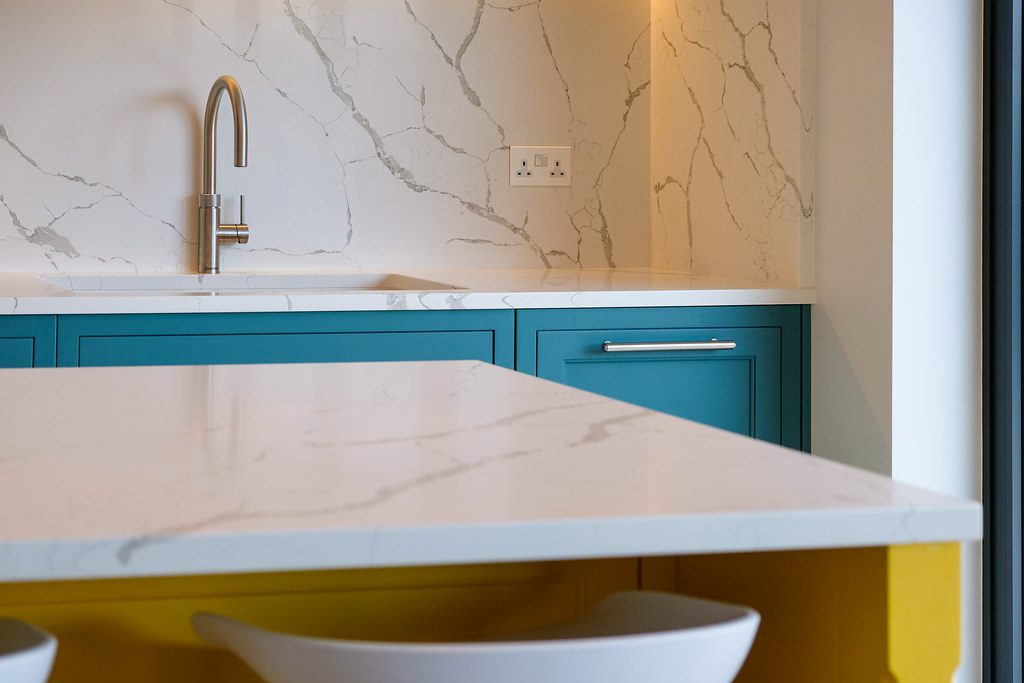
Stone works particularly well because it combines durability with visual impact.
A stone island can comfortably handle:
- Meal preparation
- Family dining
- Homework sessions
- Entertaining
- Everyday wear and tear
Large format quartz, granite and marble surfaces also help create a sense of permanence and quality.
The island becomes more than a work surface, it becomes an architectural feature.
Why Waterfall Islands Continue to Grow in Popularity
As islands become focal points, many customers are looking for ways to give them greater presence.
Waterfall ends, where the stone continues down the side of the island, help achieve this.
The continuous flow of material:
- Emphasises the islands shape
- Creates visually impact
- Makes the island feel more like a piece of furniture
In open-plan spaces, this can anchor the entire room.
Bigger Isn’t Always Better
While islands have become larger over time, size alone doesn’t determine success.
The best islands are designed around how the household actually lives.
Important considerations include:
- Seating requirements
- Circulation space
- Storage needs
- Appliance locations
- Worktop overhangs
A well-designed island should feel comfortable and practical rather than simply impressive.
A Long-Term Shift Rather Than A Trend
Unlike some kitchen fashions, the move towards island-centred living appears to be here to stay.
It reflects broader changes in home design and the way that families live.
To this end, the kitchen island has evolved beyond its original purpose. What was once additional worktop space has become so much more and as the role of the kitchen continues to change, the island increasingly becomes the place where everyday life unfolds.
It’s not replacing the dining table entirely but for more many families, it has become the most important seat in the house.