For many years, kitchens were designed to stand out. We’re talking feature extractor hoods, bold cabinetry, statement appliances and open shelving all competed for attention. Today we’re seeing something different. The kitchen hasn’t disappeared, it is becoming invisible though.
Across many of the projects that we work, customers are increasingly choosing kitchens that feel calmer and more connected to the rest of their home. Rather than filling a space with visual distractions, they are looking for designs that blend seamlessly into everyday living.
This shift has given rise to what we like to call the ‘invisible kitchen’.
What Is an Invisible Kitchen
Despite the name, an invisible kitchen isn’t hidden away behind secret doors.
Instead it is designed to feel like a traditional kitchen and more like part of the overall living space.
The focus is on reducing visual clutter and creating a cleaner, more streamlined appearance.
Common features include:
-
- Integrated fridges and dishwashers
- Concealed extraction systems
- Appliance cupboards for kettles, toasters and coffee machines
- Hidden pantries
- Handleless cabinetry
- Minimal open shelving
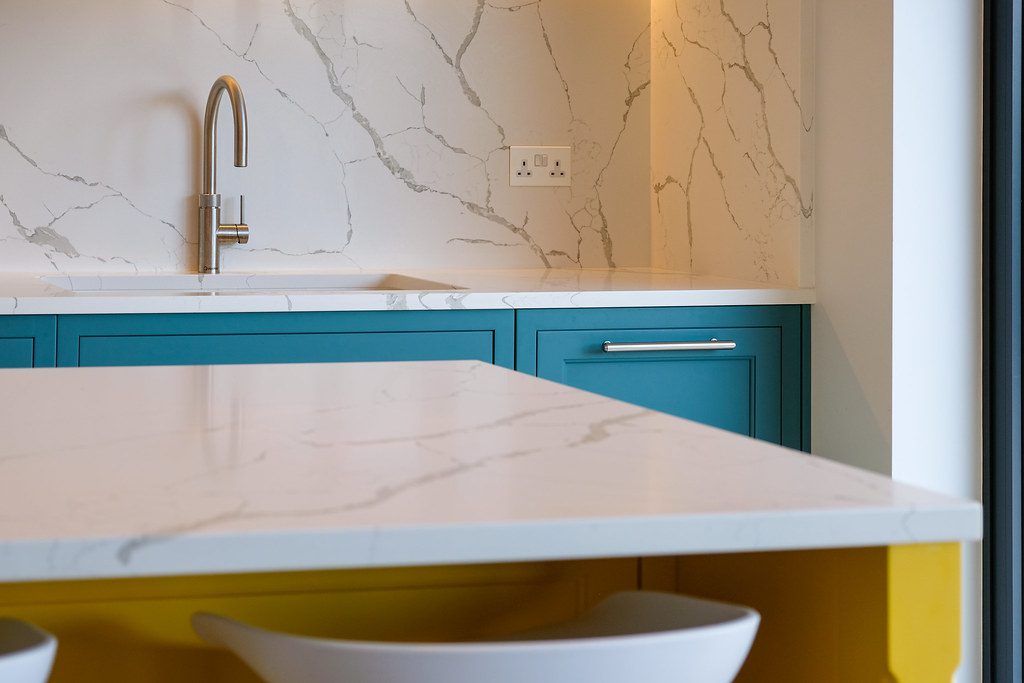
- Continuous materials across worktops and splashbacks
The result is a kitchen that feels calm, organised and effortless.
Why Are Customers Choosing This Style?
The way we use our homes has changed. Kitchens are no longer separate rooms used only for cooking. They have become places where families gather, children do homework, friends socialise and people work from home.
Because kitchens are now visible from dining and living areas, many people want them to feel less functional and more integrated with the rest of the house.
Rather than showcasing every appliance, the focus is shifting towards creating spaces that feel:
- Relaxed
- Organised
- Easy to live with
The Role of Stone in Creating a Seamless Look
Materials play a huge role in achieving this effect.
One of the simplest ways to make a kitchen feel more integrated is to reduce the number of different finishes and surfaces within the space.
Stone is particularly effective because it can be used across multiple elements including:
- Worktops
- Waterfall island ends
- Splashbacks
- Breakfast bars
- Shelving
- Pantry work surfaces
Using the same materials throughout the kitchen helps create continuity and reduces visual interruptions. The eye moves naturally through the room rather than stopping at changes in colour, texture or material.
Why Large Islands Work So Well
Kitchen islands become the focal point of modern homes.
In an invisible kitchen, the island takes on a furniture-like appearance. Stone helps reinforce this by creating clean lines.
Large format stone surfaces with minimal joins allow the island to become part of the architecture rather than simply another piece of kitchen furniture.
Waterfall ends, where the stone continues down the sides of the island, further enhance this seamless look.
Hidden Doesn’t Mean Less Practical
One misconception about invisible kitchens is that they prioritise appearance over functionality.
In reality, the opposite is often true.
These kitchens are carefully planned around how people actually use the space. Storage is more organised. Preparation areas are more considered. Appliances remain easy to access but can be hidden when not in use.
Coffee machines, air fryers, mixers and breakfast essentials can all be stored behind doors, helping the kitchen remain tidy through the day.
A Trend That Feels Built to Last
Some kitchen trends arrive quickly and disappear just as fast.
The move towards calmer, more integrated kitchens feels different.
It reflects a broader desire for simplicity, organisation and timeless design rather than a specific colour or style.
By focusing on clean lines, thoughtful storage and high-quality materials, our customers are creating kitchens that will feel relevant for years to come.
Making The Kitchen Work For the Home
The invisible kitchen isn’t about making the kitchen disappear. It’s about creating a space that feels connected to the rest of the home.
Through clever storage, integrated appliances and carefully chosen materials, such a stone, you can create a kitchen that feels calm, uncluttered and timeless.