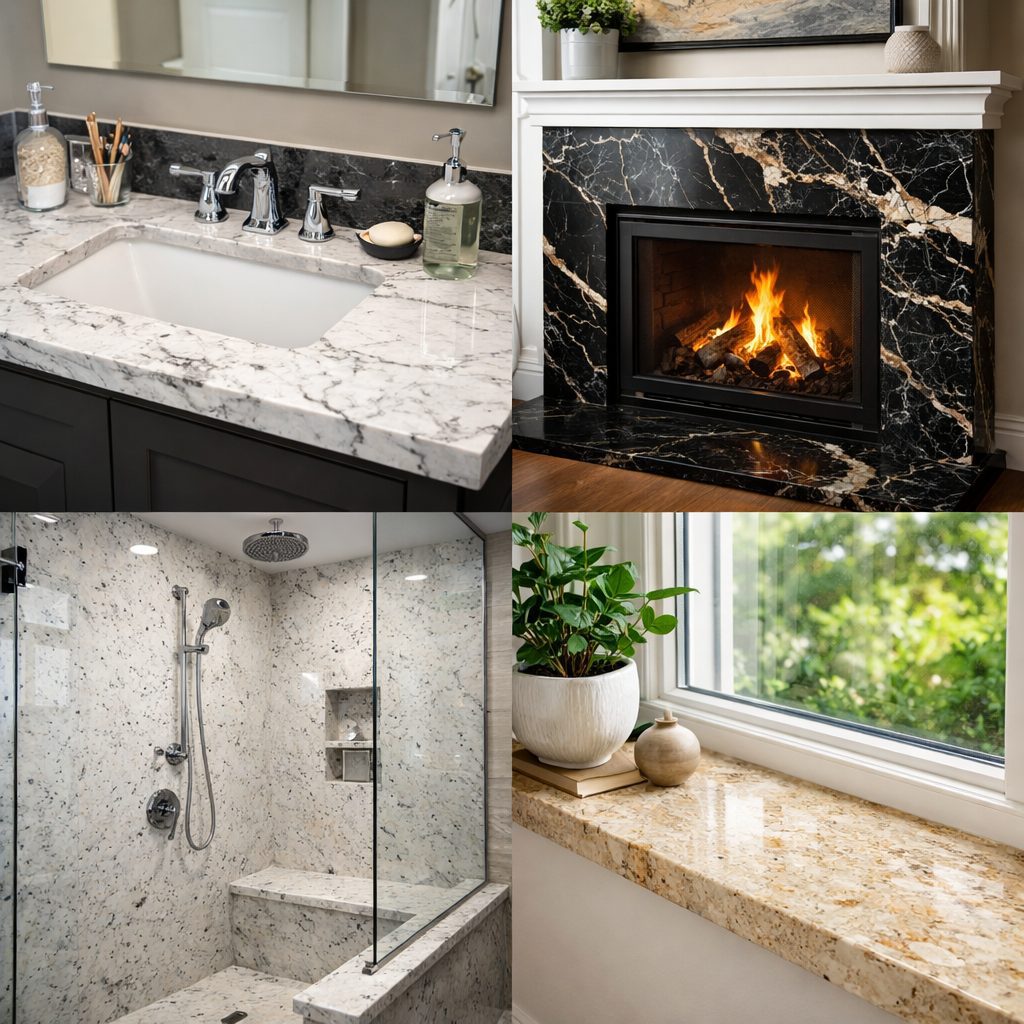
Stone worktops are most often associated with kitchens, but stone features also enhance many other areas of the home as well. Fireplaces, bathrooms and utility rooms are three areas where stone can add both practicality and design impact.
Granite, quartz, marble and sintered stone all offer durability, visual depth and long-term performance. These qualities make them suitable for a variety of interior features beyond the kitchen.
Stone Fireplace Surrounds and Hearths
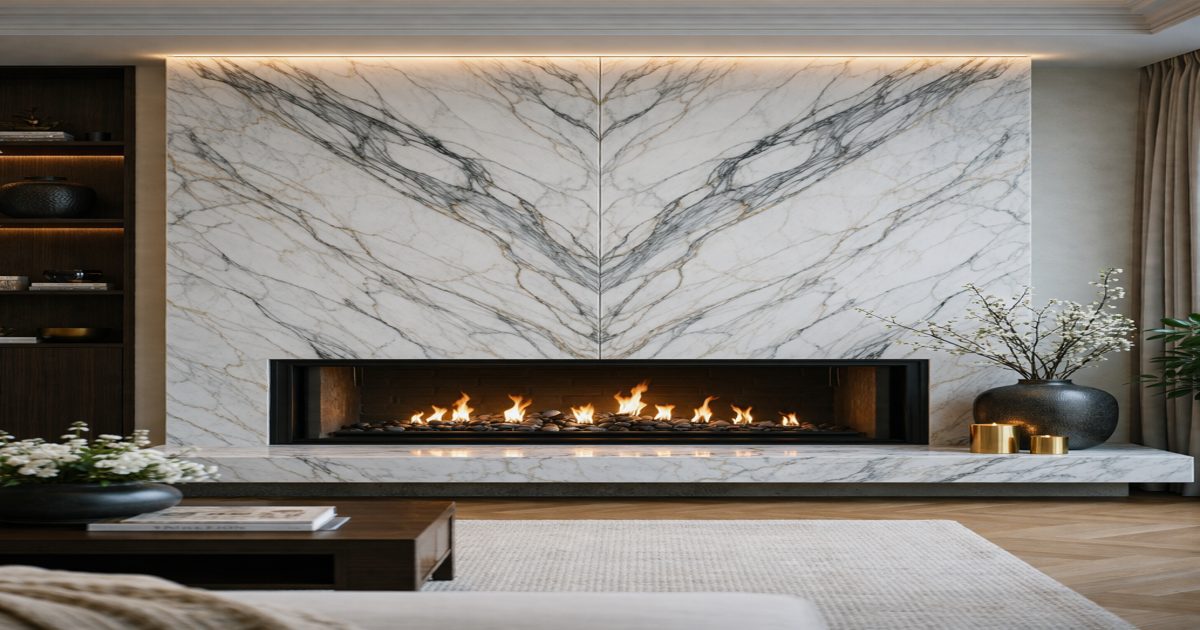
A fireplace can be the natural focal point of a room, drawing your eyes even when not in use. The material surrounding it helps frame that feature and influences how the space feels.
Stone works particularly well for fireplaces because it is:
- Heat resistant
- Structurally stable
- Visually substantial
Granite and quartz are often chosen for contemporary settings, while marble can suit more traditional interiors.
Stone hearths can also replace older tiled or concrete bases, creating a cleaner and more architectural finish around stoves or open fires.
Bathroom Vanity Surfaces
Bathrooms benefit from materials that are durable, hygienic and resistant to moisture. Stone surfaces perform well in this environment.
Quartz and sintered stones are particularly popular choices for vanity tops because they offer:
- Low maintenance
- Resistant to staining
- Consistent colour
Stone vanity surfaces can be fabricated with integrated sinks, splashbacks or waterfall edges to create a cohesive design.
Because bathrooms are typically smaller than kitchens, even subtle stone patterns can be a striking visual element.
Stone Shower Enclosures
In bathrooms, designers are increasingly moving away from tiled shower enclosures and opting for large-format stone panels. Using quartz, marble or sintered stone within a shower creates a calm finish that feels architectural.
Because stone panels can be cut in large pieces, they reduce the number of joints compared with traditional tiles. Fewer joints mean fewer grout lines, which makes the space easier to clean and visually more refined. The continuous surface also allows natural veining or subtle patterns in the stone to flow across the walls, creating a striking focal point.
Stone shower surrounds work particularly well in contemporary bathrooms. Marble-effect quartz and sintered stone are popular choices because they combine the look of natural stone with durability and low maintenance.
When executed well, a stone shower enclosure transforms the shower area from functional to a design feature.
Utility Rooms and Laundry Areas
Utility rooms often experience heavy daily use, making durable surfaces particularly valuable.
Stone worktops in these spaces can provide:
- Strong surfaces for laundry tasks
- Easy maintenance
- Resistance to detergents and cleaning products
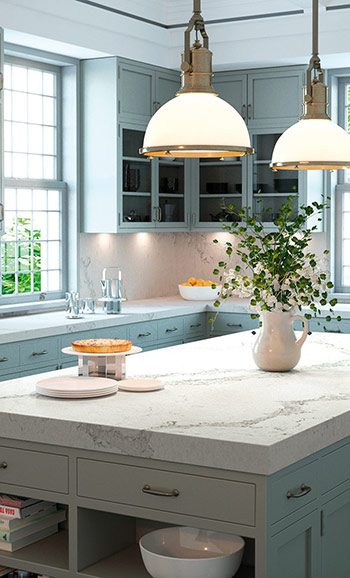
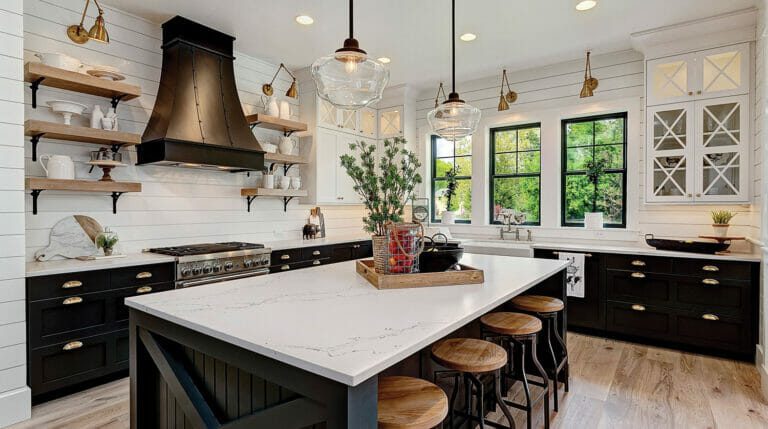
Many customers choose to co-ordinate utility rooms with the kitchen, creating continuity throughout the home. When the same material is appears in multiple rooms it helps create a sense of cohesion.
Window Sills and Architectural Details
Stone can also be used for smaller architectural elements such as window sills, shelving or niche surfaces.
These details add subtle consistency throughout the home. When the same material appears in multiple rooms, it helps make everything feel well pulled together.
Why the Fabrication Matters
While the material itself is important, the final appearance of stone features depends heavily on the skill in the fabrication.
Accurate templating, precise cutting and careful installation ensure that the finished surfaces fit correctly and align with the surrounding elements.
Because each feature is made to order, stone can be tailored to suit the exact proportions of the room.
The Bottom Line
Stone is chosen for kitchens because of its durability and visual impact, but its benefits extend far beyond that room.
Fireplaces, bathrooms and utility rooms can all benefit from the strength, beauty and longevity that stone provides.
With careful design and precise fabrication, these features can become lasting elements of your home whilst providing a design impact.